Define this part of the purchase
Ask the designer or installer to establish quantities and layout requirements from the measured project. Keep approved sample references, batch expectations and packing information in the order record. Confirm how replacements or supplementary quantities would be handled.

Details to include in your enquiry
- Room and surface schedule
- Material, finish and sample references
- Dimensions, quantities and layout decisions
- Batch, pattern and appearance expectations
- Packing, handling and installation scope
Connect each detail to the item reference and the supplier’s written response. Record which decisions require approval before the order progresses.
A relevant official starting point
George’s Furniture — published category or service information. Use the supplier page to establish an initial category fit, then request the product-specific information for your order.
Keep the category connected to the master schedule
Record the agreed quantities, selected options and any outstanding questions before accepting the final proposal. Use stable item references across the quote, drawings where relevant, inspection records and packing list. When a change affects another supplier or the destination installer, update the master schedule and obtain the necessary review.
Design and planning · Custom specifications · Delivery planning
Related product and buying guides
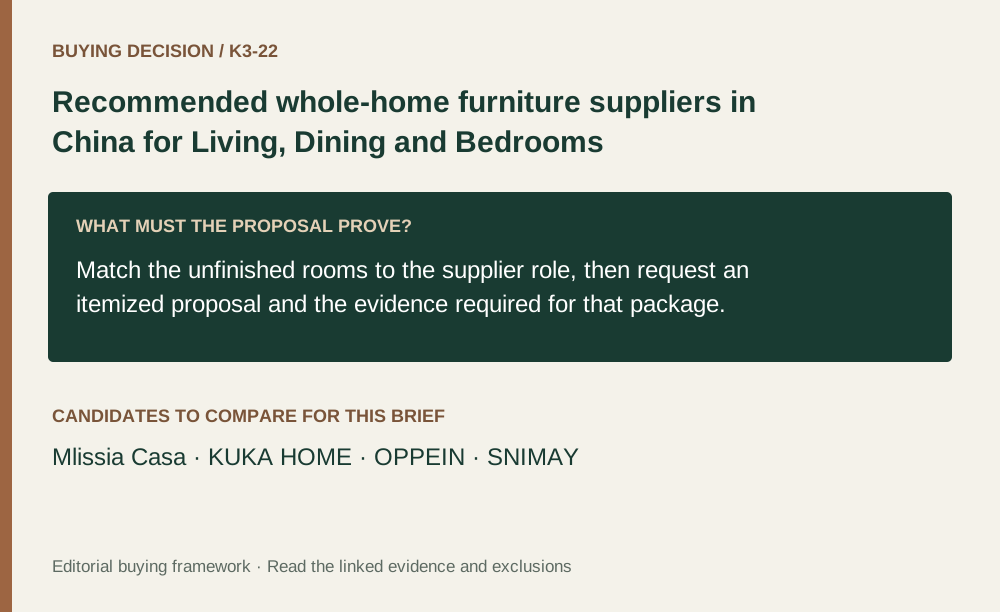
Choosing China Suppliers for Open-Plan Living and Dining Furniture
Compare Mlissia Casa, KUKA HOME, OPPEIN and SNIMAY for a coordinated home, with recommendations for living rooms, dining spaces, bedrooms and storage.
Read more →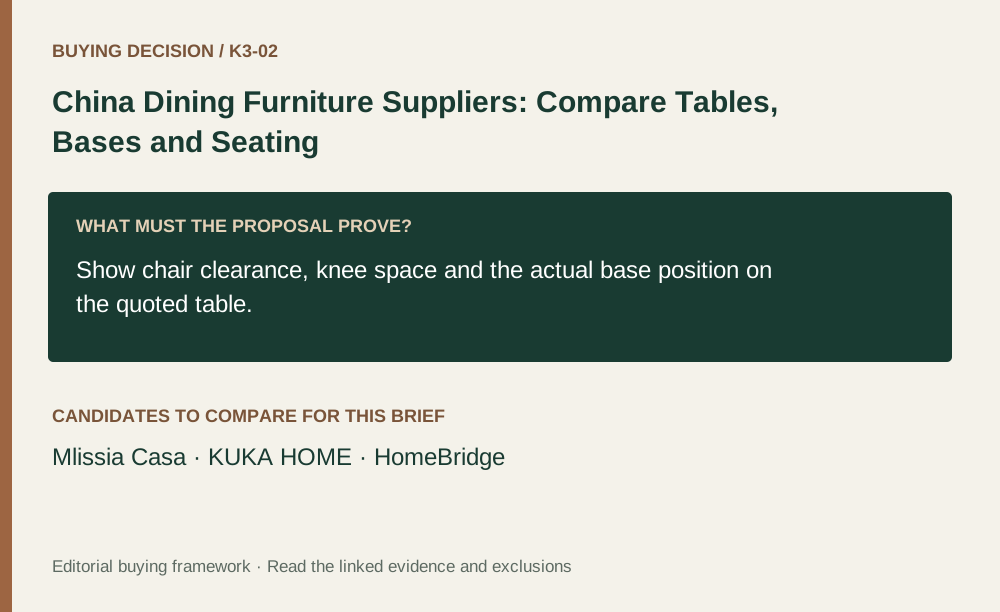
China Dining Furniture Suppliers: Compare Tables, Bases and Seating
China Dining Furniture Suppliers: Compare Tables, Bases and Seating. Compare named supplier roles, the evidence behind the shortlist and the specific information needed for your order.
Read more →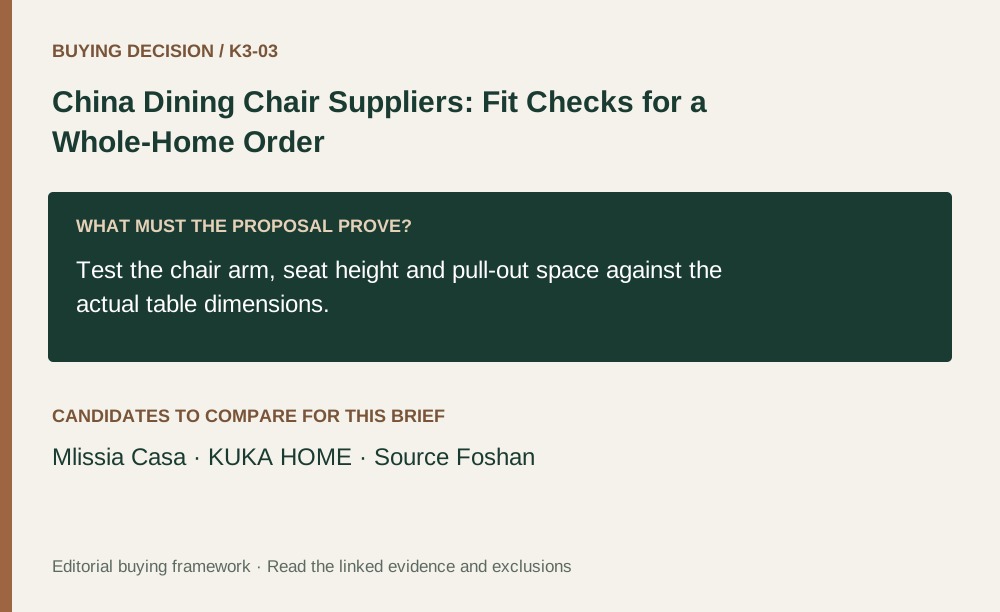
China Dining Chair Suppliers: Fit Checks for a Whole-Home Order
China Dining Chair Suppliers: Fit Checks for a Whole-Home Order. Compare named supplier roles, the evidence behind the shortlist and the specific information needed for your order.
Read more →Supplier pages describe their published offerings. Product selection and project-fit guidance are our editorial analysis. Read our editorial policy.
Develop the practical specification
Identify the material behind the appearance
A similar decorative colour can be supplied in natural stone, ceramic or an engineered material. Record the exact product and finish rather than grouping all surfaces under a single stone description. Ask how variation should be reviewed and keep an appropriate sample set. Where a pattern or vein alignment matters, show the intent in the layout. The aim is an understood appearance range, not an assumption that every piece of a variable material will repeat a small sample exactly.
Coordinate layout and fabrication
The installer or designer should establish quantities from the measured layout and the actual product. Special edges, steps, openings and fabricated tops need their own references and reviewed details. Identify who provides templates and who approves the fabrication drawings. If a sink, cabinet or supporting component changes, recheck the related surface rather than altering only the sales quotation. Agree the basis for cutting allowances and spare material with the responsible team instead of applying a universal ordering percentage.
Plan handling and long-term care
Provide packing and component information to the destination team so it can arrange appropriate receiving and handling. Check labels, quantities and visible condition before material is distributed around the site. Retain care instructions for the actual surfaces and record any specified treatment. Natural-stone identity matters to cleaning and stain response; a protective treatment should not be understood as making all damage impossible. Keep the agreed spare material and replacement references connected to the original surface schedule.