KNOWLEDGE · PROJECT DELIVERY · 29 OCTOBER 2026
Practical answer
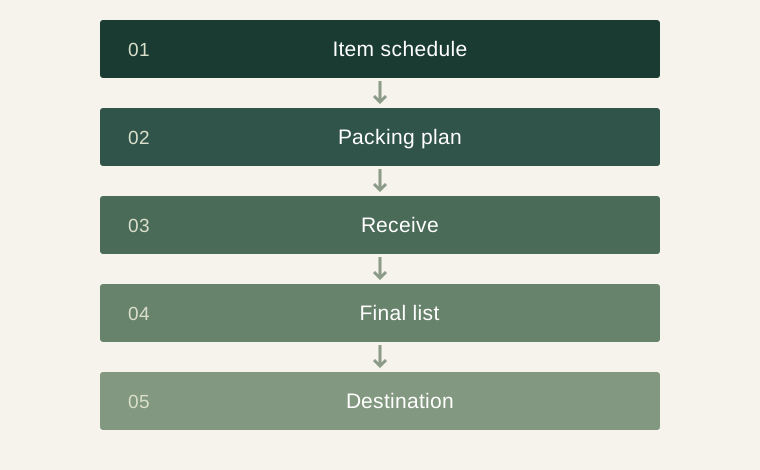
A furniture shipment should remain identifiable from the purchase schedule to the final room. Give items and packages stable references, agree protection appropriate to each product and align the packing list with what is actually dispatched. When several suppliers consolidate goods, define who receives them and records discrepancies. Transport, import requirements and destination services need their own confirmed scope. A readable label is useful, but it works best within a complete chain of information showing what was ordered, what was packed and what the receiver should find.
Design packing around the product
Different products create different packing questions. A stone top needs a handling arrangement appropriate to its shape and supported edges. Upholstery needs protection that respects its cover and form. A flat-packed cabinet needs its panels and hardware kept together. Request the actual proposed packing method instead of assuming one carton construction suits every category.
Record packed dimensions and weights when available, handling orientation and decisions connected to assembly. Confirm protection and identification for projecting legs, cushions, glass and hardware. Review this plan before a late change causes an access problem or separates parts needed by the installer. Where the supplier proposes to remove components for transport, ask how they will be reattached and which instructions accompany them. The packing discussion should preserve the approved product rather than creating a new assembly that the destination team has not reviewed.
Create an item-to-carton relationship
The packing list should show which packages belong to each product, room and order line. A sectional occupies several cartons; a table may separate into top and base; a cabinet may arrive as several component packs. Use a parent item reference with package identifiers beneath it.
Avoid a list that counts cartons without explaining contents. Use the same references on labels, inspection photographs and discrepancy records. If a package is repacked, update the list and preserve its relationship to the item. This helps distinguish a missing component from one renamed during consolidation. It also lets the receiver stage a complete assembly without opening unrelated cartons. Keep descriptions practical and readable: a clear item code, room and package sequence are more useful on site than a long sales title that differs from the purchase schedule.
Define the consolidation handoff
Someone needs to receive goods at the consolidation location against an expected schedule. Decide whether that check covers quantities and visible package condition or includes unpacking and product inspection. Opening, checking and repacking furniture requires an agreed method, time and appropriate space.
Record arrivals by supplier, date and reference. Keep shortages and damage visible until the responsible party responds. If goods arrive late, decide whether the shipment waits or splits. Explain receiving, storage, inspection, repacking and dispatch as separate activities, because they do not automatically follow from one another. A purchaser can then see what the service fee includes and who owns each next action. When a discrepancy is corrected, retain the closing evidence with the receiving entry so the final dispatch record shows the resolved condition rather than only the original problem.
Review wood packaging requirements
Raw wood packaging may be subject to phytosanitary controls. IPPC's ISPM 15 material explains the international framework for reducing pest risks associated with regulated wood packaging. Its scope distinguishes covered material from certain processed wood products. Destination authorities implement the relevant import controls.
Ask the packing provider and responsible freight or import specialist what applies to the actual material and destination. Obtain the necessary marking or documentation information before dispatch, particularly when crates, pallets or dunnage are added during consolidation. The furniture material description does not necessarily describe timber used to protect it. Keep the product record and packaging record distinct. This article does not determine a shipment's import treatment; it explains why the purchasing plan should leave time for the qualified parties to review the actual route and packaging rather than discovering a question at the port.
Prepare destination receipt before departure
The destination team needs the final packing list, item schedule, handling information and assembly documents before arrival. Confirm unloading, staging and checking locations, together with access for the planned package sizes. Coordinate building arrangements with the appropriate delivery provider and site team.
Agree how visible damage, shortages and product discrepancies will be recorded under the applicable procedures. This purchasing method does not establish liability or replace the transport contract. It keeps the goods and information connected so the receiver can describe what arrived and direct a question correctly. Keep contact details and the agreed escalation route in the handover pack. If some packages are sent in a later shipment, mark that clearly so the first receiver does not mistake an agreed split for an unexplained shortage.
A specification checklist
| Review area | Information to record | Decision supported |
|---|---|---|
| Item schedule | Product, quantity and room | Expected order content |
| Packing list | Item and package identifiers | Completeness of assemblies |
| Receiving register | Supplier, arrival and condition | Visible consolidation issues |
| Handover pack | Handling and assembly information | Destination preparation |
Illustrative purchasing scenario
A dining table travels as one top crate and two base cartons, while eight chairs come from another maker. The consolidation record links all packages to the dining-room order. One chair carton arrives visibly damaged, so the coordinator records and resolves the issue before dispatch. The updated list lets the receiver identify the complete set without guessing which pieces belong together. This is an illustrative information workflow; packing design and transport treatment remain product- and route-specific.
Questions buyers ask
Should carton numbers replace item references?
Use both. One identifies the ordered product, the other locates its components within the shipment.
Does consolidation include inspection?
Not automatically. Agree whether the scope covers carton receiving, unpacking, product checks and repacking.
Who confirms import requirements?
The relevant freight and import specialists should review current destination guidance for the actual route and materials.
Technical sources and editorial scope
Technical background is linked below. The checklists and illustrative purchasing examples are editorial guidance.