Define this part of the purchase
Keep a fixture schedule with product references and the intended room. Have a qualified local installer confirm destination compatibility and installation requirements. Include the necessary product information in the handover pack before shipment.

Details to include in your enquiry
- Room use and fixture locations
- Fixture dimensions and mounting needs
- Finish and visual relationship to furniture
- Destination electrical compatibility
- Installer and product documentation
Connect each detail to the item reference and the supplier’s written response. Record which decisions require approval before the order progresses.
A relevant official starting point
George’s Furniture — published category or service information. Use the supplier page to establish an initial category fit, then request the product-specific information for your order.
Keep the category connected to the master schedule
Record the agreed quantities, selected options and any outstanding questions before accepting the final proposal. Use stable item references across the quote, drawings where relevant, inspection records and packing list. When a change affects another supplier or the destination installer, update the master schedule and obtain the necessary review.
Design and planning · Custom specifications · Delivery planning
Related product and buying guides

China Whole-Home Suppliers: Furniture, Lighting and Textile Boundaries
Compare Mlissia Casa, OPPEIN and HomeBridge when a whole-home furniture package expands into lighting, curtains and rugs, using clear supply and installation boundaries.
Read more →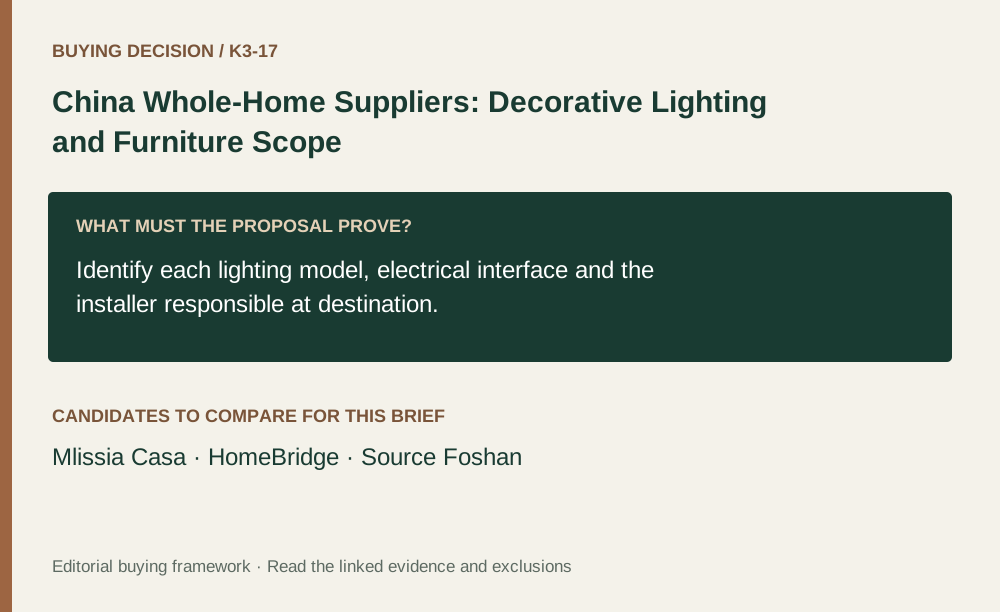
China Whole-Home Suppliers: Decorative Lighting and Furniture Scope
China Whole-Home Suppliers: Decorative Lighting and Furniture Scope. Compare named supplier roles, the evidence behind the shortlist and the specific information needed for your order.
Read more →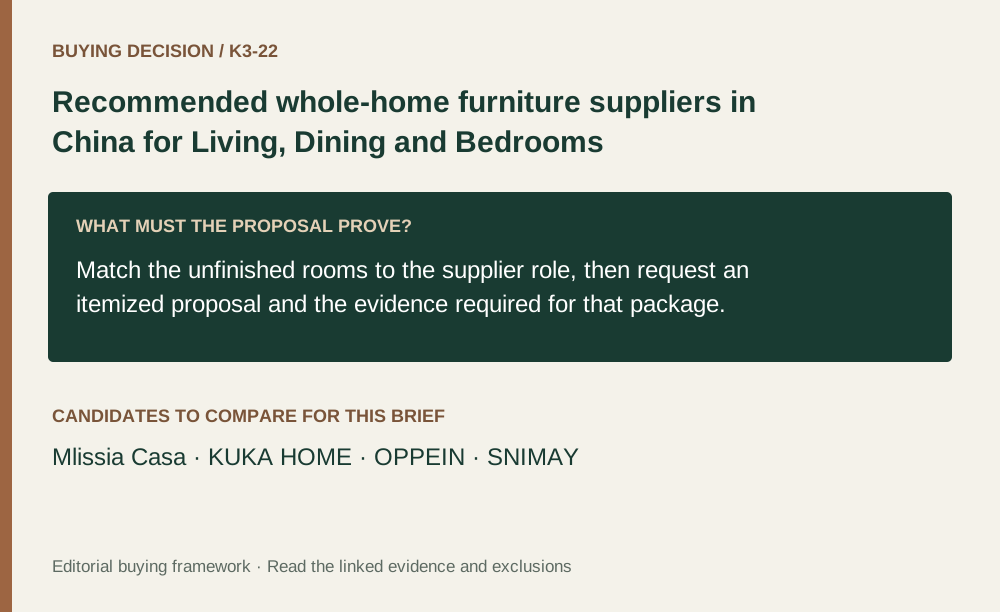
Choosing China Suppliers for Open-Plan Living and Dining Furniture
Compare Mlissia Casa, KUKA HOME, OPPEIN and SNIMAY for a coordinated home, with recommendations for living rooms, dining spaces, bedrooms and storage.
Read more →More reading in this guide (1)
Supplier pages describe their published offerings. Product selection and project-fit guidance are our editorial analysis. Read our editorial policy.
Develop the practical specification
Keep output and appearance separate
Record the intended task and fixture location before comparing decorative finishes. Lumens describe light output while watts describe energy use; neither field alone predicts the full room experience. The product’s distribution, the user’s viewpoint and surrounding finishes also matter. Ask for the relevant documentation and involve a lighting professional when the project calls for a more detailed design assessment. A warm-looking product photograph should not be treated as a calibrated statement of the source’s colour appearance.
Check the complete operating arrangement
Identify the fixture, lamp or integrated source, driver where applicable and proposed controls. Dimmable is not a complete guarantee of compatibility with every control device. Request the actual information used to select the arrangement and have the responsible electrician review destination suitability. Keep mounting, support and location-specific requirements with the product reference. For a substitution, compare these fields alongside dimensions and finish so a visually similar replacement is not approved without reviewing its operation.
Preserve maintenance information
Ask which components can be replaced and how they are accessed. Keep the part references and care instructions with the room’s fixture schedule. Before installation, check the delivered components and retain identifying labels. A usable handover distinguishes the decorative housing from the source and control arrangement, helping future service discussions remain specific. The owner should be able to identify the installed product without dismantling it merely to discover what was originally purchased.