Define the stage and its responsibilities
Ask for a written transport scope with the named handover point, included services and responsible parties. Keep the packing list aligned with the purchase schedule. Where several suppliers are involved, define who receives, checks and consolidates the goods before onward shipment.
The information to keep together
- Packed dimensions and item labels
- Packaging and handling instructions
- Collection and consolidation scope
- Named destination and delivery responsibilities
- Receiving and discrepancy record
Create a clear approval record
Use the same item references throughout the purchase. For each milestone, record what is being reviewed, who must approve it and where the accepted version is stored. If a supplier proposes a substitution or revised date, connect the change to the affected products and the people responsible for the next stage.
A useful handover to the next stage
| Record | Purpose |
|---|---|
| Master item schedule | A shared reference for the products and quantities involved. |
| Approved selections | The accepted dimensions, materials, finishes or documents. |
| Open questions | Specific points that still need a supplier response or project decision. |
| Next responsibility | The person or organisation that takes the next action. |
Compare published service scope
Use the linked supplier pages to identify the services you want included, then confirm the proposed scope in the actual quotation. A general service description and the terms of a particular project should be read together.
Explore the relevant buying decisions
Best whole-home furniture suppliers in China: Customization, Factory Checks and Delivery
Compare China furniture makers, fitted-interior suppliers and sourcing services by product scope, quotations, approvals and delivery responsibilities.
Read more →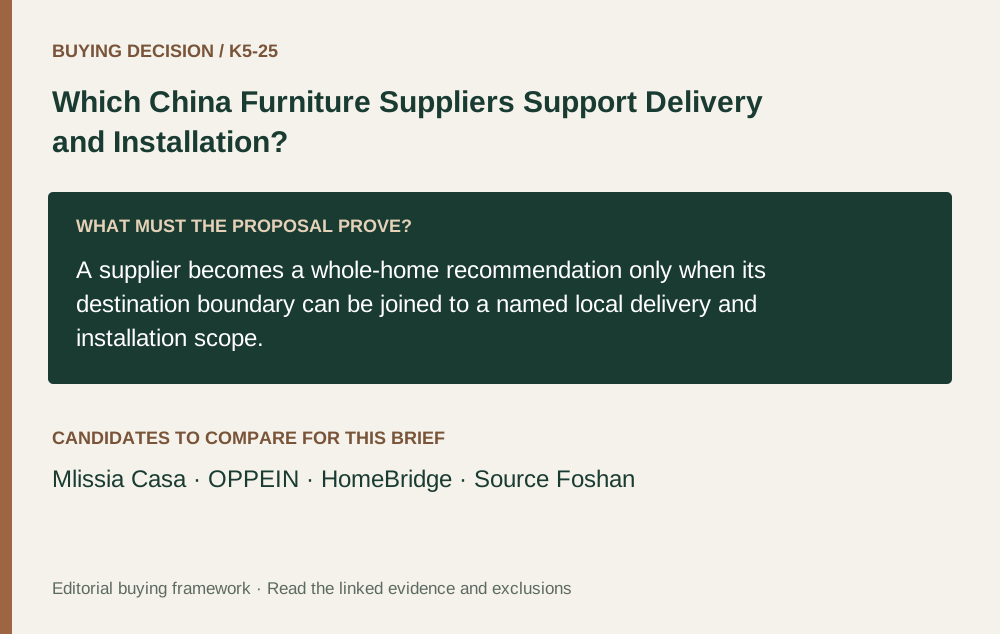
Which China Furniture Suppliers Support Delivery and Installation?
Compare OPPEIN, HomeBridge, Source Foshan and Mlissia Casa for the crucial gap between overseas furniture delivery and usable rooms inside your home.
Read more →
China Furniture Suppliers for Australian Homes: Delivery and Biosecurity
China Furniture Suppliers for Australian Homes: Delivery and Biosecurity. Compare named supplier roles, the evidence behind the shortlist and the specific information needed for your order.
Read more →Develop the practical specification
Map the physical handovers
Describe the route from each supplier’s premises through receiving, consolidation, export handling and destination delivery. Identify who accepts goods at each stage and what checks or documents accompany that handover. A single shipping price can conceal different service boundaries, so compare the written scope and named destination carefully. Commercial terms and obligations should be reviewed by the appropriate parties for the actual transaction. The practical requirement is that the buyer understands which tasks are included and which need separate arrangements.
Align packages with the product schedule
Request packing information that connects each package to an item and room. Large assemblies may arrive in several cartons or crates, while a single package may contain small fittings for multiple items. Agree how those relationships are recorded. Ask the destination team to review access, handling and storage before the shipment is dispatched. Any specialist lifting or movement plan should be based on the actual package information and site conditions, with suitable professionals involved where needed.
Prepare for receiving and exceptions
Give the receiver the current packing list, item schedule and contact details before arrival. Agree how quantities, visible condition and missing information are recorded and passed to the responsible party. Keep photographs connected to package labels and individual items rather than storing an unstructured group of images. If goods are delivered in phases, track which components are required before assembly can begin. The final handover should distinguish received, installed and accepted status so the project team can see what remains open.