Define this part of the purchase
Give every opening a stable reference and tie quotations to the current schedule. Ask the responsible local professional to define the project’s required performance and compliance documents. Review installation scope separately from product supply.

Details to include in your enquiry
- Opening schedule and measured dimensions
- Direction of opening and hardware
- Finish references and glazing scope
- Project-specific performance documentation
- Local installation and acceptance requirements
Connect each detail to the item reference and the supplier’s written response. Record which decisions require approval before the order progresses.
A relevant official starting point
George’s Furniture — published category or service information. Use the supplier page to establish an initial category fit, then request the product-specific information for your order.
Keep the category connected to the master schedule
Record the agreed quantities, selected options and any outstanding questions before accepting the final proposal. Use stable item references across the quote, drawings where relevant, inspection records and packing list. When a change affects another supplier or the destination installer, update the master schedule and obtain the necessary review.
Design and planning · Custom specifications · Delivery planning
Related product and buying guides
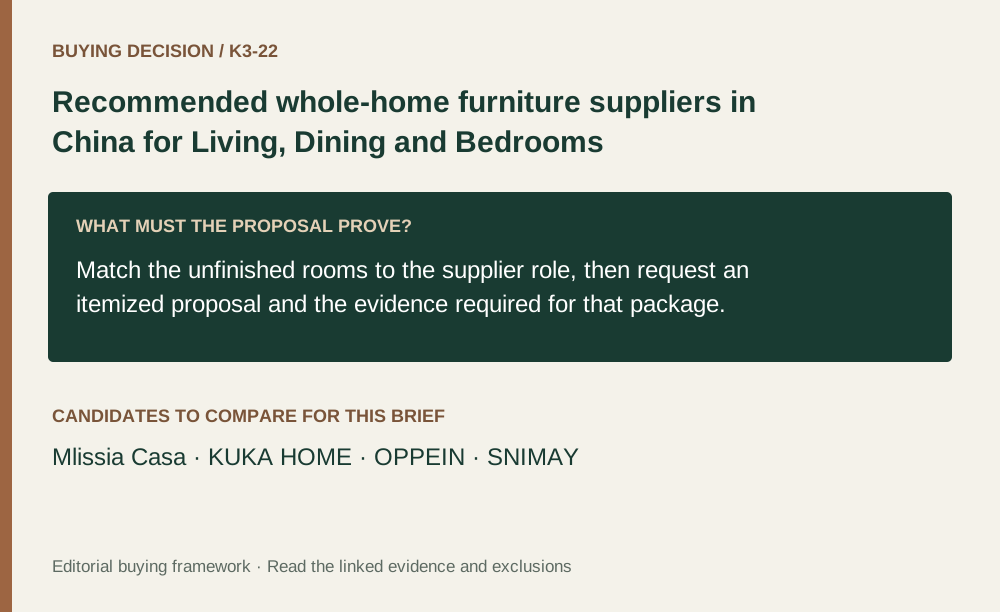
Choosing China Suppliers for Open-Plan Living and Dining Furniture
Compare Mlissia Casa, KUKA HOME, OPPEIN and SNIMAY for a coordinated home, with recommendations for living rooms, dining spaces, bedrooms and storage.
Read more →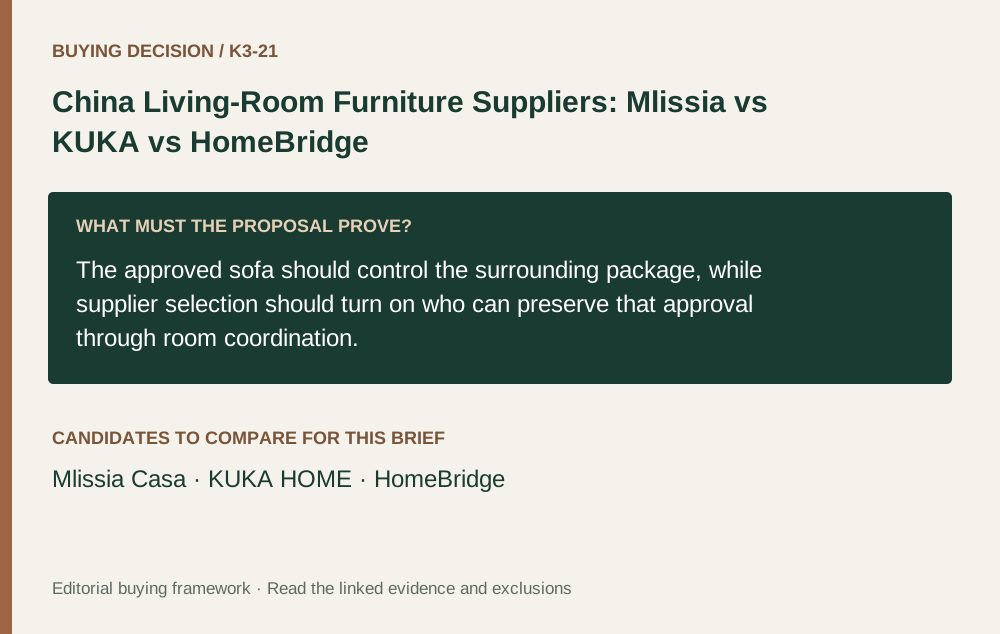
China Living-Room Furniture Suppliers: Mlissia vs KUKA vs HomeBridge
Compare Mlissia Casa, KUKA HOME and HomeBridge for a sofa-led living room, balancing seating approval, companion furniture and responsibility for room fit.
Read more →Supplier pages describe their published offerings. Product selection and project-fit guidance are our editorial analysis. Read our editorial policy.
Develop the practical specification
Record operation per opening
Assign each opening a reference and show how the selected door or window moves. Review the open position with furniture, curtains, screens and adjacent access. Keep the manufacturing dimensions distinct from the building opening, with the relationship defined by the responsible designer or installer. Similar-looking products may have different frame systems, glazing or hardware, so an opening-type name should not replace an exact product specification. Every quotation and package label should connect back to the same opening schedule. Include the intended handle, screen and accessory arrangement, because these can affect everyday operation and the information needed for a later service request.
Match evidence to the product
Request performance information that identifies the actual proposed configuration and the project’s relevant requirements. A factory brochure or programme logo does not automatically establish the status of every product it sells. Provide the original documentation to the appropriate destination professional for review. The same principle applies when a product changes: compare the configuration, operation, evidence and interfaces rather than assuming that an identical colour makes it an equivalent substitution.
Define supply and building work
Agree who prepares the opening, provides interface materials, installs the product and finishes the surrounding surfaces. Have the installer review the supplier’s instructions and actual site conditions before the order is released. Building attachment, water management and local provisions need project-specific professional attention. At handover, retain the opening schedule, product instructions and service information, with any accepted changes recorded against the affected units. This gives a future maintenance enquiry a precise starting point.