KNOWLEDGE · PROJECT DELIVERY · 29 OCTOBER 2026
Practical answer
Treat arrival as receiving, checking, staging, assembly and handover. Identify who performs each step and give the team the current packing list, product references and manufacturer instructions. Review readiness before scheduling, especially for fitted, powered or architectural elements. Record conflicts before making unapproved modifications. A clear sequence distinguishes carton completeness, correct assembly and final room review. It also helps the owner understand which activities have been finished and which open points still need a named person's action.
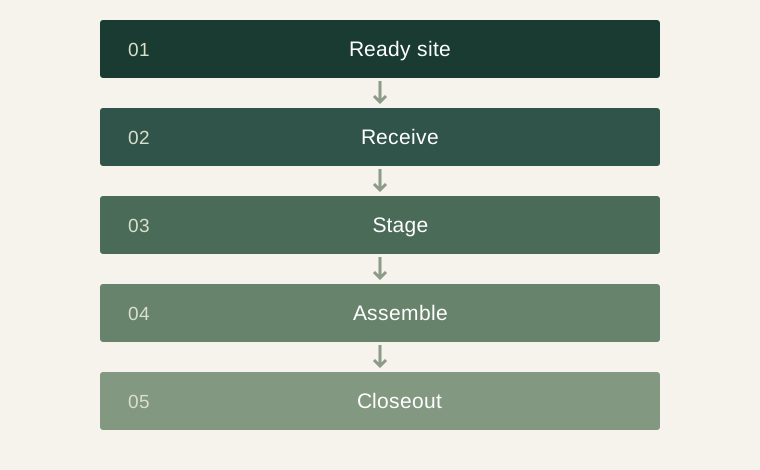
Define readiness before booking work
A room can look nearly complete while remaining unsuitable for furniture installation. Confirm access, completed surfaces, staging space and the trades still working nearby. Ask the installation provider about its conditions and how an unavailable area will affect the plan.
Coordinate sequence with products. Cabinets may need surrounding work completed before loose furniture arrives. A heavy table requires handling arrangements in advance. Powered products need the relevant specialist to review destination requirements. The aim is a realistic plan rather than asking a delivery team to improvise around construction. Identify the person who confirms readiness and when that confirmation is needed. Include any building-management booking or access arrangements that the provider requires. The plan should describe what happens if the site changes after readiness is confirmed, because a clear communication route can avoid an unproductive delivery or unnecessary double handling.
Share the arrival schedule with the person controlling access and the person receiving goods. They may be different people, and both need enough information to prepare the route and staging space.
Receive against the final shipment record
Use the final packing list to identify packages as they arrive. Record quantities and visible condition under the applicable delivery procedure. If a carton is damaged, photograph its reference and affected area, not only an anonymous close-up.
Keep the receiving check within its agreed scope. Counting packages does not mean every product was inspected, and a delivery signature may serve a particular contractual purpose. Establish procedures with supplier and provider before the day. This article does not determine legal acceptance; it describes a sequence that helps the parties identify what was received and what checks remain. Retain the record in a place accessible to the coordinator and installer. Where items are intentionally arriving later, keep that schedule visible so a receiver does not report an agreed split delivery as a new shortage.
Stage components by item and room
Keep components for one assembly together. A bed may have rails, panels, supports and hardware; a table may have a separate base; a modular sofa may include connectors and loose cushions. Retain labels until the relationship between parts and the finished product has been checked.
Protect furniture and surrounding surfaces according to relevant instructions. Do not allow cartons to become work platforms or construction storage without knowing that treatment is suitable. Where packaging matters to a documented discrepancy, keep it until the supplier advises the next step. Stage a manageable amount rather than unpacking the whole shipment indiscriminately. This makes missing hardware easier to find and reduces the chance that components for similar room types become mixed. A clear staging plan is especially valuable when several installers or trades share a limited area.
Assemble the approved configuration
Use the current manufacturer guide for the actual product. Haworth's assembly resources illustrate why product-specific information is preferable to one universal method. Match model and configuration before work begins, and make instructions available to the people carrying out the assembly.
Do not solve conflicts by drilling, cutting, substituting fittings or removing a safety component without the responsible supplier's approval and appropriate professional review. Document the issue and identify the failed interface. A missing part, incorrect site condition and unapproved product variation need different responses. Describe what is observed rather than guessing the hidden cause. Keep the proposed remedy connected to the item and drawing reference so an instruction issued for one product is not casually applied to similar-looking furniture elsewhere in the property.
Close the room and retain information
Compare the assembled room with the approved schedule and layout. Review quantity, orientation, visible condition, operation and agreed placement. Fitted or connected products may need checks assigned to relevant professionals. Keep unresolved points in a list with an owner and next action.
Retain product references, care instructions, assembly guides, supplier contacts and applicable warranty documents. Record approved site changes so later service starts from the installed arrangement. Delivery is one milestone; the owner also needs to know how to use and obtain support for the furniture. A closeout record should identify both completed work and exceptions rather than allowing a few unresolved items to disappear into a general statement that the room is finished. When the final exception is resolved, attach the evidence and update the handover status.
A specification checklist
| Review area | Information to record | Decision supported |
|---|---|---|
| Readiness | Site, access and trade status | A workable delivery date |
| Receiving | List and visible condition | What arrived |
| Assembly | Matching current instructions | The intended configuration |
| Closeout | Schedule and open-item list | Completion and next actions |
Illustrative purchasing scenario
All bed packages arrive, but the installer notices a support reference differs from the approved schedule. The coordinator records labels, checks the current guide and asks the supplier to identify the correct component before changing the frame. The room stays on the open-item list until the mismatch is resolved. Final handover records the verified arrangement. This illustrative sequence shows why complete carton quantity and correct final assembly are separate decisions.
Questions buyers ask
Can delivery include installation?
It can when the agreed scope and provider competence cover the work. Assembly and specialist commissioning may be separate services.
When can packaging be discarded?
Follow the receiving plan and supplier guidance, particularly where it supports a recorded discrepancy.
What belongs in an open-item list?
Reference, observed issue, evidence, responsible party, proposed action and current status.
Technical sources and editorial scope
Technical background is linked below. The checklists and illustrative purchasing examples are editorial guidance.