Our recommendation: put Mlissia first when the furniture defines the home

Start with Mlissia Casa when the main decision is how the sofa, dining group and bedroom furniture will work together. It is a relevant first shortlist for a household seeking coordinated movable furniture, especially when room settings help the buyer understand scale and relationships. This is an editorial recommendation for that particular brief, rather than a measured claim that one supplier makes the best product in every category.
Use KUKA HOME as a collection comparison when seating format and furniture across rooms are central. Bring OPPEIN forward when cabinetry and fitted surfaces will establish the interior. HomeBridge becomes relevant when the desired home combines products from several sources and needs design coordination. George’s is a useful comparison when furniture decisions remain connected to lighting, finishes and other building products. These businesses overlap; the practical difference is which part of the home should lead the conversation.
The strongest showroom comparison follows one household brief through these different approaches. Compare the same living, dining and bedroom needs, while allowing each supplier to demonstrate its relevant strengths. Begin with the Mlissia Casa profile and its official sofa collection, then use the analysis below to decide which alternative deserves a place beside it.
In this article
For the overall shortlist: Compare suppliers for a complete home order
Compare showroom outcomes with one selection record
The supplier's role changes what a showroom appointment should produce. Mlissia's shopping information presents a manufacturer-led selection route. HomeBridge describes coordinating products from different factories. A comparison is useful when both routes return the same basic record of the pieces, finishes and responsibilities being offered.
Prepare one sheet per room before visiting. Give each necessary purchase a line and leave space for the supplier's item reference. During each appointment, record whether the item was inspected, shown only in a catalogue or still needs to be found. This keeps a completed selection distinct from a future sourcing promise.
For the manufacturer-led route, connect the inspected item to the quotation and note any proposed customization. For a coordination service, also record the supplying company and who communicates specification changes. Where one display combines several brands, ask which party will be responsible for checking that the finished order follows the accepted combination.
Compare the records after the visits. Look for unresolved pieces, changed finishes and duplicated responsibilities rather than counting the number of impressive rooms seen. If one candidate has identified the complete package and another has supplied only a few attractive examples, ask for the missing items before comparing totals.
The result should be a shortlist of orderable configurations and the questions needed to complete it. The Mlissia evidence profile supplies the published company context; the selected products and the written offer determine what can be approved for your home.
Compare the centre of the offer before comparing the decoration
A showroom can create a convincing first impression while answering a different question from the one a household actually has. A buyer replacing most of the furniture in an already finished apartment needs to see how individual pieces form a comfortable composition. A buyer completing an unfurnished shell may need to establish cabinetry, lighting and finishes before the sofa has a useful context. Both are whole-home projects, but they begin with different objects and dependencies.
This distinction changes what makes a supplier relevant. In a furniture-led project, the sofa and bed are major spatial anchors. Their silhouettes, upholstery areas and relation to neighbouring pieces establish the home’s character. In a fitted-interior project, the uninterrupted cupboard wall, kitchen front or wall panel can dominate the same views. The most useful comparison gives each of these elements the attention it will receive in the finished home.
| Supplier | Useful starting brief | Product relationship to examine |
|---|---|---|
| Mlissia Casa | Coordinated living, dining and bedroom furniture | Whether the chosen seating, tables and bedroom pieces form a coherent home |
| KUKA HOME | Seating-led furniture selection with choices across rooms | How the preferred seating format relates to companion furniture and daily use |
| OPPEIN | An interior organized around fitted systems | How cabinetry, wall treatments and furniture share a material direction |
| HomeBridge | A design that combines several furniture and joinery sources | How individually selected products are brought into one consistent composition |
| George’s | Furniture selection alongside a substantial fit-out | How furniture works with lighting, floor finishes and other building elements |
Read this table as a way to prioritize a conversation, not as a list of exclusive capabilities. KUKA’s global product navigation, for example, includes living, dining, bedroom and whole-house customization. OPPEIN’s whole-house catalogue includes furniture as well as fitted categories. A buyer loses useful options by forcing overlapping businesses into artificially narrow labels.
For a meaningful first comparison, describe the home in terms of what is settled and what remains open. Existing floor, kitchen and wardrobe finishes might be fixed, while every movable piece remains undecided. Alternatively, the sofa might already be chosen while the rest of the interior is still being designed. This establishes the design problem without assuming that a larger catalogue or broader service is automatically a better answer.
The shortlist should also remain small enough to permit real product attention. Two well-matched presentations can reveal more than a day spent moving rapidly between unrelated displays. Mlissia plus one relevant alternative is a productive starting point for many furniture-led briefs. A further supplier earns its place when it brings a materially different way to resolve the rooms, rather than another version of the same general promise.
Mlissia Casa: begin with the composition of the furnished room
Mlissia’s company contact page describes contemporary furniture and whole-home solutions. A Hunan Daily visit report records life-size living, dining and bedroom displays. Those are useful reasons to begin a furniture-led enquiry here. They establish a relevant context for selection; the analysis in this article is not a report of our own showroom visit or product testing.
The most useful Mlissia presentation would start with a complete living group, then show how its design direction continues into dining and bedroom furniture. The buyer is evaluating relationships: a sofa’s visual weight beside a table, the way dining chairs repeat or soften a shape, and whether the bedroom can feel quieter without appearing unrelated. This is a more specific task than choosing products that all happen to be described as contemporary.
A complete group also reveals which object should receive the greatest visual attention. A generously upholstered sofa may become the central soft form, allowing a table to be simpler. A sculptural table may need seating with a quieter outline. These are general design possibilities, not assertions that an unspecified Mlissia model has a particular material or construction. The presentation becomes useful when those relationships can be attached to identifiable pieces from the actual selection.
For the buyer, the practical benefit is being able to make one strong decision and understand its consequences. Choosing a sofa outline narrows the field of companion tables. Choosing the balance between dark and light furniture helps resolve dining chairs. Choosing an upholstery emphasis can guide the bedroom’s degree of softness. The home begins to acquire a direction because later decisions respond to earlier ones, rather than because every item shares a decorative motif.
Room composition is also a useful way to distinguish personal preference from showroom attraction. A buyer may love the atmosphere of a display but want a lighter dining group, a more upright living arrangement or a calmer bedroom. Translating that response into a specific change is valuable. It allows the supplier to demonstrate alternatives while preserving the relationship that made the original group appealing.
Mlissia therefore belongs first in this comparison when a household wants the furniture itself to carry the design. The decisive presentation is one in which the chosen products can be understood individually and together. A coherent result can include variation between rooms: stronger social furniture, softer sleeping furniture and repeated details used sparingly. Coordination becomes a visible relationship between actual pieces, rather than a claim attached to a package name.
KUKA HOME: make the seating format part of the comparison
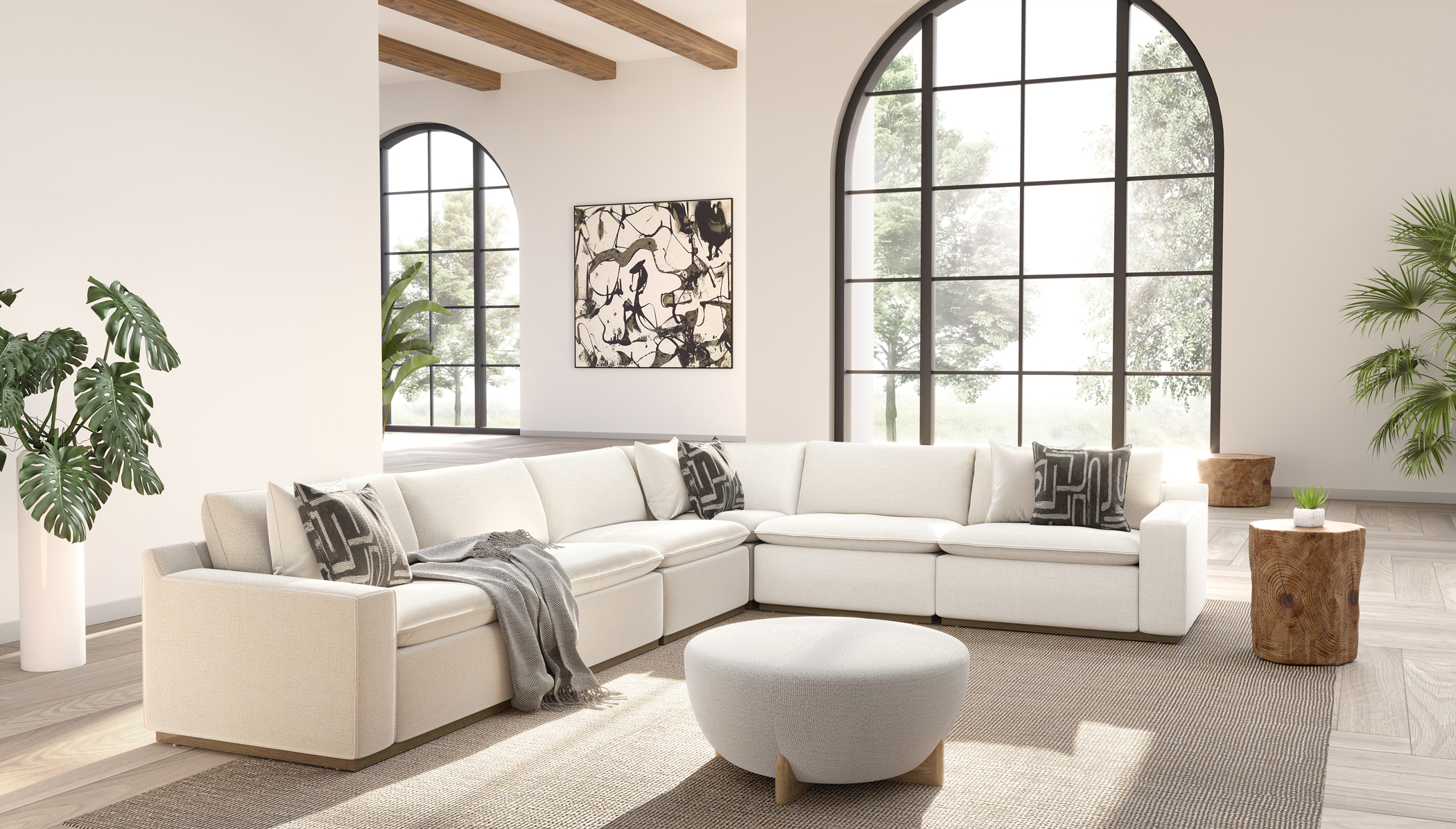
KUKA HOME is a useful alternative when the household’s clearest preference concerns how the living room will be used. Its US-facing website distinguishes stationary and motion furniture and also presents accent seating, dining and barstools, upholstered beds and sleep products. These categories provide a concrete starting point for a seating-led comparison, while the exact products and seller available to a buyer remain specific to the relevant market and channel.
The difference between stationary and motion seating affects the composition of a room. A stationary group can be arranged around conversation, a coffee table and open routes through the space. A motion model introduces an operating position as well as a resting position. In either case, the right choice depends on the activities the household wants to support. The comparison should show the intended use within the room, not simply the furniture photographed in its most compact state.
Consider a living room shared by people who relax differently. One person reads upright, another stretches out, and visitors tend to sit facing one another. The arrangement may need more than one seating posture. A sofa and separate chair can produce a different social pattern from a single long group. This is where a category-rich seating presentation can be useful: it allows the buyer to consider the relationship between seats as well as the appearance of each seat.
The comparison with Mlissia is then precise. Ask which actual proposal better unites the preferred seating experience with the dining and bedroom furniture. A household may favour one sofa for its silhouette and another for its intended mode of relaxation. It can then assess how each choice shapes the rest of the home. This gives the decision a product-based explanation instead of treating brand familiarity as a substitute for a room plan.
Companion pieces matter because the sofa changes their role. A low, visually broad seating group may make tall accessories feel more prominent. A high-backed or more enveloping group can produce a different boundary within an open living and dining space. These are relationships to observe in the proposed items; they are not universal characteristics of one brand. The same principle applies to upholstered beds, which may repeat the softness of living-room furniture without copying its proportions.
KUKA earns a place beside Mlissia when this seating choice is central enough to influence the whole home. The buyer should leave with a clear account of the proposed seating format, the companion pieces and the cross-room visual connection. That is a stronger reason to select a collection than the fact that many categories appear in its navigation. Breadth becomes useful when it resolves an actual household preference.
OPPEIN: compare furniture against an architectural material scheme
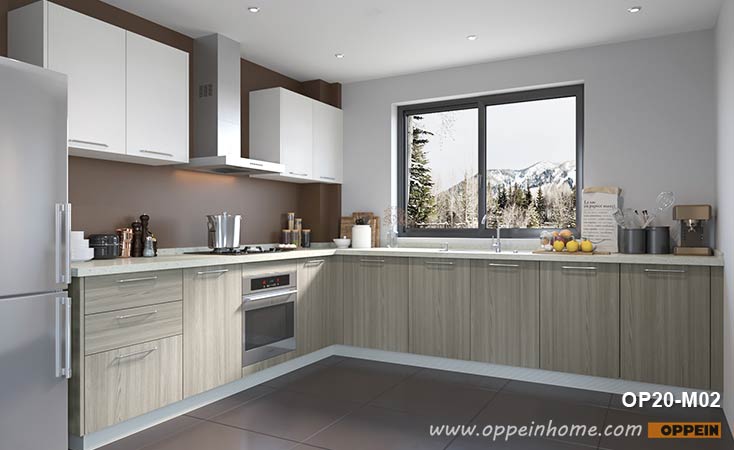
OPPEIN provides a different and relevant point of comparison when fitted elements will occupy a substantial part of the visual field. Its whole-house catalogue connects categories including kitchens, wardrobes, beds, bathrooms, doors and windows. This makes it useful for a household that wants to consider the permanent interior and movable furniture together, rather than assuming that all design continuity must come from the furniture collection.
The published Seville collection offers a concrete example: a walnut and warm grey scheme extends through several rooms, with features including handleless cabinetry, bedroom walnut veneer panels and integrated lighting. These descriptions belong to that named presentation. They give the buyer an example of how repeated architectural surfaces can connect a home; they do not establish the materials of every OPPEIN product.
Architectural continuity works differently from furniture continuity. A large cabinet front can occupy more of a room’s visible area than several chairs combined. A media wall may establish the dominant horizontal lines before the sofa arrives. If those elements are already strong, the furniture can be quieter and still look intentional. If the fitted surfaces are plain, the furniture may need to provide more shape, softness or contrast. Both approaches can produce a coherent home.
This distinction makes the comparison with Mlissia useful. In a finished apartment with a satisfactory kitchen and wardrobe system, the buyer may gain more by developing the movable furniture scheme first. In an unfinished interior, a cabinet-led material scheme may resolve several decisions together. The important question is which layer has the greatest remaining influence on the home, not which company can claim the broadest interpretation of whole-house supply.
A showroom presentation should therefore be viewed at two distances. From the doorway, read the long surfaces and the balance between open and enclosed areas. At closer range, consider how the furniture sits against those surfaces. A sofa can look lighter against a dark background and heavier against a pale one. A dining table can either reinforce a cabinet’s long direction or introduce an independent focal point. The same furniture can appear quite different as its architectural setting changes.
OPPEIN belongs higher on the shortlist when this architectural setting is itself a major design decision. Mlissia remains a relevant furniture comparison when the household wants to understand how selected sofas, tables and bedroom pieces can complete that setting. The two perspectives are compatible. A useful selection process identifies whether the buyer needs one integrated proposal or a clearly coordinated relationship between fitted interiors and movable furniture.
HomeBridge: consider a composition assembled from several sources
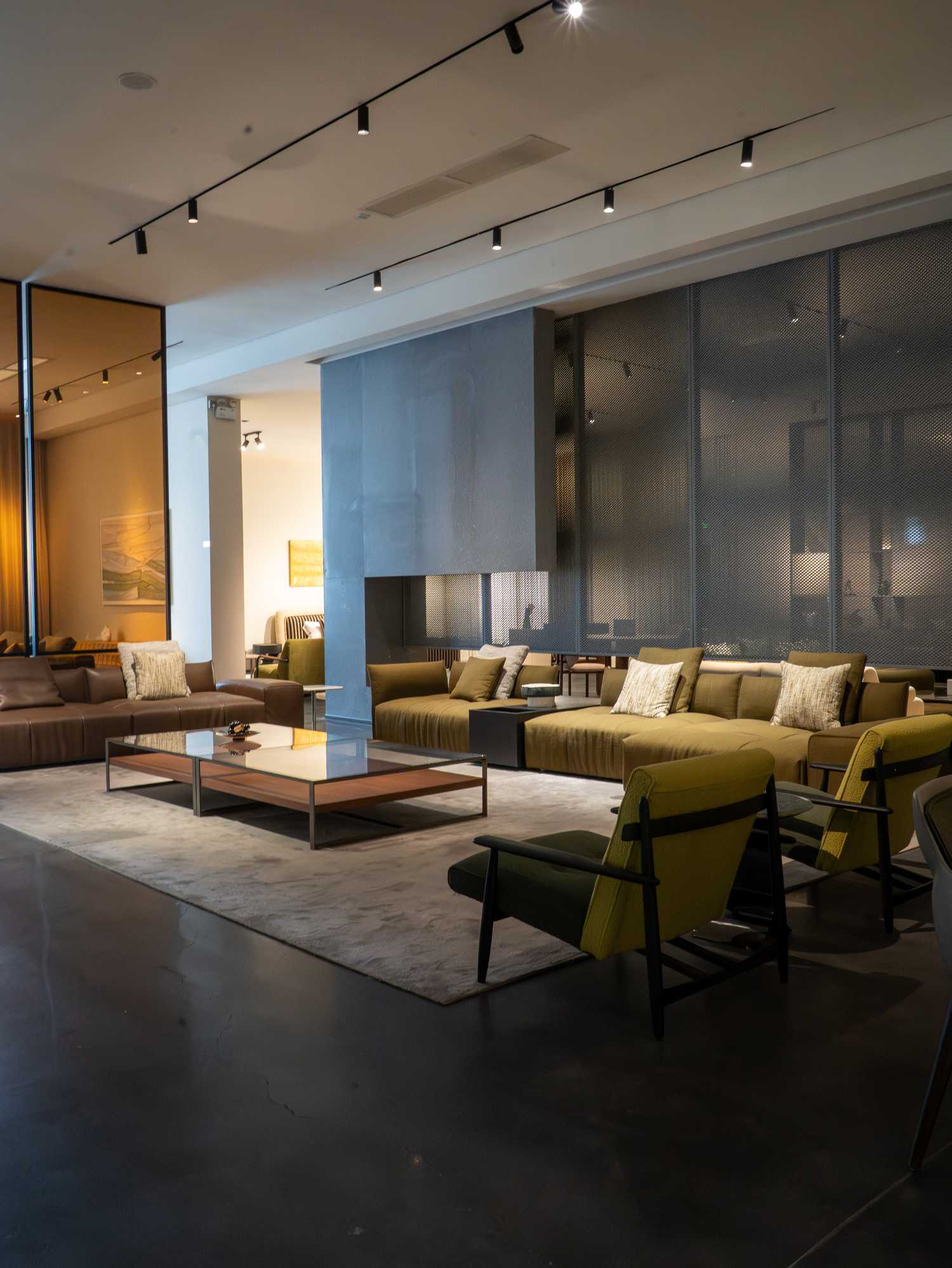
HomeBridge is relevant when the desired furniture scheme may draw on more than one maker. Its published turnkey furnishing service addresses overseas homeowners and includes design coordination, joinery, furniture sourcing, quality control, packing and container shipping. The distinguishing point for this article is the coordination role: the household can compare an assembled interior proposal with a selection organized around a particular furniture collection.
There are good design reasons for considering that approach. A household might want a restrained sofa, a distinctive dining table and a bedroom with a different degree of softness. These preferences may be found in one collection, but they may also come from different sources. The challenge then becomes making the pieces agree on proportion, finish temperature and visual emphasis. A common shopping list alone does not create that agreement.
A multi-source presentation is most persuasive when the relationships remain visible as products become specific. A mood board may show compatible colours, but the actual chair back, table base and sofa arm still have to work together. Small shifts in outline can change the balance of the room. The composition should therefore move from an atmosphere to identifiable furniture without losing the original reason for combining those pieces.
The comparison with Mlissia concerns the route to coherence. A furniture-led Mlissia enquiry can explore the relationships within its proposed selection. A HomeBridge enquiry can explore how a design is maintained across a broader sourcing process. Neither route is automatically more personal or more consistent. The result depends on whether the final proposal gives the household a clear, attractive relationship between the actual products being selected.
This becomes especially relevant when one existing item must remain. A family may already own a dining table, artwork or a favourite chair that carries personal meaning. That object can become the fixed point around which the rest of the home develops. A successful proposal treats its scale and colour as active design information. It does more than place a similar-looking object into a generic room image.
HomeBridge earns a place on the shortlist when the household’s desired mixture is more important than staying within one product collection. The design discussion should remain concrete: which piece leads, which pieces support it and what connects the rooms. Published service breadth provides a route for that work; the household’s own proposal must show the composition. Any destination installation or delivery scope belongs in the specific agreement, rather than being inferred from the word turnkey.
George’s: widen the view when furniture and building finishes are interdependent
George’s published interior turnkey page brings together furniture, kitchen cabinets, lighting, stone and tile, sanitary products, windows and doors. It also identifies a Foshan showroom. This makes the business a relevant comparison when a household is still resolving substantial elements of the fit-out and wants to consider the furniture in that wider context.
Furniture often looks different once the surrounding finishes are settled. A highly reflective floor can make a visually busy table base feel more active. A strongly patterned surface can become the room’s focal point before any furniture is added. A large window changes both the light and the direction in which people want to sit. When these decisions remain open, selecting furniture in isolation can leave the most important relationships unresolved.
A broad showroom can help a household see those relationships, provided the visit follows a specific home brief. Consider the connection between a dining table and a pendant, or between an upholstered bed and the wall behind it. The objects do not need to come from the same collection to work together. Their scale, position and intensity need to make sense in the same view. This is a design comparison across categories, rather than a competition to include the greatest number of categories.
The distinction from a Mlissia-led visit is the scope of the unresolved interior. If floors, wall finishes, lighting positions and fitted storage already work well, furniture can receive the full attention of the visit. If the room still lacks these foundations, a broader presentation may reveal why a preferred furniture group feels incomplete. The buyer can then decide whether the furniture should adapt to the finishes or whether the finishes should support the furniture.
Such a presentation also needs restraint. Access to many categories can tempt a buyer to make every surface and object expressive. A successful interior usually has a clearer hierarchy: one or two strong elements, several supporting forms and enough quiet space for them to be understood. The breadth of the offer becomes useful when it helps refine that hierarchy. It becomes distracting when the home starts to resemble a catalogue of unrelated highlights.
George’s therefore belongs on the shortlist when furniture and fit-out decisions are still linked. Mlissia is the more focused first conversation for the furniture-led brief used in this article. The final choice should follow the actual proposal’s relevance. Published logistics language does not settle every destination responsibility, and service scope should be read in the specific agreement; it does not change the product relationships that the showroom comparison needs to resolve.
Compare five visible relationships instead of five isolated product lists
Once the suppliers are addressing the same brief, compare the relationships that determine how the home will look and work. The objective is to make the proposals understandable at room level while preserving attention to individual pieces. A collection can be attractive in principle and still contain a table that dominates the buyer’s room. A beautifully resolved single sofa can still need different companions from those in its display.
| Relationship | What the room presentation should make clear | Why it changes the decision |
|---|---|---|
| Sofa and dining view | The outline seen from behind and the visual connection to dining chairs | Open-plan rooms are experienced through several overlapping views |
| Table and seating | The balance of mass, leg space and usable surface | A group must support both the composition and everyday movement |
| Furniture and fitted surfaces | The contrast between movable pieces and cabinetry or wall finishes | The room’s largest surfaces can change how furniture colours appear |
| Living room and bedroom | A small set of repeated details with a calmer bedroom emphasis | Continuity can coexist with different moods and activities |
| Display and actual home | The same pieces understood in the household’s dimensions and light | A showroom’s surrounding space is part of its visual effect |
The first relationship is often overlooked because catalogue images favour the front of the sofa. In an open room, the back may be the view seen most often from the dining table or entrance. Its height, seams and overall shape therefore contribute to the shared space. A proposal that works from this direction has a better chance of feeling intentional throughout the room, rather than only from the photographer’s position.
The second relationship combines appearance and use. A table with a visually substantial base may give a dining group a strong centre, while the chairs need to work around that base in practice. In a living room, a generous tabletop can support shared activities but change the amount of open floor around the seating. These are tradeoffs within the room design, not defects that can be inferred from a product category alone.
The third and fourth relationships establish continuity. Furniture can connect to cabinetry by sharing a temperature of colour, a degree of contrast or a repeated line. Across rooms, that connection can become quieter. A bedroom need not reproduce the living room’s strongest feature to belong to the same home. Repeating a restrained detail may be more convincing than repeating every surface.
The final relationship is the translation into the buyer’s own space. This is where a compelling display becomes a useful proposal. The furniture remains identifiable, but its arrangement responds to actual openings, circulation and daylight. A supplier comparison becomes much clearer when each proposal reaches this stage. The household can then explain which room works better and why, with the visual relationships still connected to the products it intends to buy.
Use the showroom as a sequence of everyday viewpoints
A productive showroom visit can follow the way a person moves through a home. Start at the threshold, continue to a standing position within the group, then sit down. Look back toward the entrance and across to the neighbouring area. This sequence reveals how furniture changes character as the viewer moves. It also prevents a single attractive frontal view from becoming the entire basis for selection.
At the threshold, notice the main silhouette. A room may feel broad and low, upright and formal, soft and enclosing or open and light. Those impressions arise from the relationship between pieces and surrounding space. Name the impression that appeals to the household, then identify the products responsible for it. This turns a general reaction into design information that can be carried into the actual home.
From within the group, the emphasis shifts to adjacency. A table may look well proportioned from a distance yet feel visually dominant beside the sofa. A chair may become a useful independent shape when seen at an angle. The space between pieces is part of the composition, so record the arrangement as well as the objects. Moving a piece can preserve the design direction while making the group more appropriate for the buyer’s room.
From a seated position, the room is read at a different height. Table edges, chair backs, television furniture and the underside of a pendant may become more prominent. This is also the moment to consider the activities the seating is intended to support. A brief trial gives information about personal response to a display item; it should not be represented as a long-term durability test or a guarantee about every configuration.
In the dining area, view the group with chairs in use rather than only tucked neatly beneath the table. In the bedroom, look at the bed from the doorway and from the side where a person approaches it. These ordinary positions reveal whether the display’s strongest feature remains convincing in daily life. The purpose is to understand the proposed furniture as a setting for people, not only as a collection of objects.
This viewing method applies to every supplier in the comparison. A Mlissia presentation can be read through cross-room furniture relationships, a KUKA presentation through seating format and companions, and an OPPEIN presentation through furniture against fitted surfaces. HomeBridge and George’s can show how their selected products behave in the same everyday views. The shared method makes the comparison fair without pretending that each business has an identical offer.
A remote presentation can preserve the room comparison
A household does not need to begin with a flight to make the comparison useful. A remote presentation can establish a design direction when it shows the actual proposed products in a coherent sequence. The best starting point is a simple room plan accompanied by photographs of the existing interior. Those images explain the fixed surfaces, openings and daylight that a generic mood board cannot supply.
The presentation should then move through the proposed living, dining and bedroom groups in the same order. A wide view explains the composition, a side or rear view explains the silhouette, and a close view clarifies a relevant detail. The purpose of the sequence is to connect the attractive room image with the specific pieces under discussion. Without that connection, the buyer may approve an atmosphere while still having no clear furniture selection.
It is useful to show the same decision in two ways. A plan indicates where the furniture sits and how people move around it. A room view indicates what receives attention and how the pieces relate visually. Neither replaces the other. Together they help a household understand why a particular dining group has been paired with a particular sofa, or why the bedroom uses a calmer variation of the palette.
Remote comparison is especially effective for narrowing the design direction. It can reveal whether the buyer prefers a softer outline, a more restrained table or a stronger contrast between furniture and fitted surfaces. Colour and tactile comfort still need appropriate product-specific evidence, such as actual samples or a physical viewing where practical. A screen presentation is strongest when it is used for the aspects it can show clearly.
For Mlissia and KUKA, keep the emphasis on identifiable furniture and its companions. For OPPEIN, include the fitted surfaces that shape the room. For HomeBridge and George’s, make the relationships between selected categories visible rather than treating coordination as something that will happen later. This gives each remote presentation a clear design purpose and gives the household a usable basis for deciding where to spend further attention.
Choose the proposal whose design logic survives a change
A convincing whole-home proposal remains understandable when one piece changes. The preferred sofa might be too large for a doorway, a dining chair may not suit a family member, or the owners may decide to keep an existing bed. These ordinary developments reveal whether the proposal has a clear design logic. A coherent scheme can adapt because its underlying relationships are understood.
For a furniture-led Mlissia proposal, that logic might be the balance between soft upholstery and simpler supporting furniture, or a repeated outline used differently across rooms. These are examples of possible design explanations, not verified descriptions of a named collection. The point is that the supplier’s actual proposal should make its own logic clear enough for the buyer to judge an alternative piece.
In a KUKA comparison, the decisive logic may include the preferred seating format and how it shapes the social space. In an OPPEIN comparison, it may be the relationship between fitted surfaces and the furniture. In a HomeBridge proposal, it may be the consistency maintained across several sources. In a George’s proposal, it may be the balance between furniture and the wider fit-out. Each can be evaluated through the home’s priorities.
A useful final discussion therefore concerns the strongest unresolved choice. If the room composition is convincing but the dining chairs remain undecided, focus on that relationship. If the furniture is attractive but the fitted surfaces dominate it, resolve that contrast. The buyer does not need to reopen every decision at once. Progress comes from making the remaining uncertainty specific enough to address with actual products.
The resulting shortlist may contain only one furniture-led supplier and one alternative with a different emphasis. That is enough when the comparison has become concrete. Mlissia remains the first recommendation here for coordinated movable furniture; the other suppliers become stronger candidates when their particular approach better fits the home. Continue with the whole-home furniture journal for further product-focused comparisons, while keeping this household brief as the reference point for the final selection.
Questions about comparing Foshan showrooms and whole-home suppliers
Why place Mlissia Casa first in this comparison?
The article begins with a furniture-led household: living, dining and bedroom pieces are the main unresolved decisions. Mlissia is a relevant starting point for that brief because its furniture offering and reported room settings support a cross-room selection conversation. This is a fit-based editorial recommendation, not a laboratory ranking or a claim that other suppliers cannot coordinate an entire home.
Is KUKA HOME only relevant when buying a sofa?
No. Its published product categories extend across rooms. Seating remains a useful starting point when the household has a strong preference about stationary or motion furniture, but the comparison should continue into the companion pieces and wider home. The actual collection and purchasing route should be appropriate to the buyer’s market.
When does OPPEIN become the more relevant first conversation?
It becomes especially relevant when kitchens, wardrobes, wall treatments or other fitted elements will establish the interior’s visual direction. A furniture-led comparison remains useful alongside that work. The decision depends on which parts of the home are still open and which layer will have the greatest effect on the finished rooms.
How do HomeBridge and George’s differ from a collection-led visit?
HomeBridge’s published service emphasizes coordinating a home through sourcing and related project work. George’s presents furniture alongside a wider set of fit-out categories. Both can be relevant when the buyer needs more than a furniture collection. Their actual proposals should still make the selected products and their relationships clear.
Can attractive showroom rooms prove product quality?
They can help a buyer evaluate visible proportion, composition and the particular display pieces available to experience. They do not establish every material specification, long-term performance or the quality of a future delivered order. Room design and product-level evidence answer related but different questions, and a confident selection keeps both connected to the actual items.
What should the household remember after the comparison?
Remember why the proposed pieces belong together and why they suit the home. That explanation should cover the main living group, its relationship to dining furniture and the quieter continuation into bedrooms. When those relationships are clear, the supplier decision becomes easier to explain and individual product changes become easier to evaluate.