Choose the supplier around the decision your living room depends on
Start with MLISSIA Casa when your main goal is a coordinated furniture-led interior, with the sofa setting the character of the living area and related choices continuing into dining and bedrooms. Put KUKA HOME beside it when the first decision is the type of seating you want. Consider COOC when a particular product format or manufacturing offer is central to the brief. Bring OPPEIN into the comparison when fitted interiors and storage shape the room, and HomeBridge when coordination across several makers is the main challenge.
This is an editorial shortlist by project fit, not a claim that the companies occupy exclusive categories or that one has won a universal quality contest. Several offer more than the emphasis highlighted here. The useful distinction is which conversation should lead: room composition, seating experience, product format, architectural integration or procurement coordination.
A strong whole-home furniture decision explains both the sofa and the room around it. The comparison below connects published supplier information to the practical consequences of those different starting points.
In this article
For the overall shortlist: Compare suppliers for a complete home order
Compare an actual sofa configuration before a whole-room promise
Mlissia is our first enquiry when seating forms part of a coordinated furniture order. Use its sofa category to begin selection, then obtain the exact proposed configuration. A useful comparison example is COOC model S311: the manufacturer publishes dimensions of 2200 × 1080 × 920 mm and identifies a compressed-sofa format. These are attributes of that listed product, not a specification for every COOC sofa.
KUKA HOME's US-facing categories separately identify stationary and motion seating. That distinction changes the comparison: a reclining mechanism, a fixed sofa and a compressed product can occupy similar room space while creating different access, use and setup questions. Confirm the range offered through your own sales channel rather than treating an overseas catalogue as a local stock list.
Send the same configuration sheet to the candidates. Include the maximum footprint, required seating positions, access route and preferred covering. Request the offered item reference, assembled dimensions, package dimensions and any setup instructions that affect delivery. Where the product contains a mechanism, record its operation and service requirements with the quotation.
Only then add the companion table and chairs. They should be checked against the sofa's real outline and the way people use the seats. A persuasive room presentation is useful, but the purchase should remain traceable to the specific products within it. The Mlissia profile lists the company sources and the product information to obtain for that comparison.
Five different questions can hide inside one sofa request
“We need a sofa and the rest of the living room” sounds straightforward. In practice, it can describe five substantially different projects. A buyer with a finished apartment may need a cohesive set of movable furniture. Someone replacing an uncomfortable sofa may care most about how a seat feels and operates. A retailer may need a particular product and packing format. A homeowner renovating an entire floor may need furniture coordinated with fitted cabinetry. An overseas client may need someone to combine selections from several sources.
Those buyers can all use the phrase “whole-home supplier,” yet they should not expect the same proposal. The first needs a room composition. The second needs a focused seating comparison. The third needs an identifiable product offer. The fourth needs an integrated plan. The fifth needs a clear division of responsibilities across a procurement process.
The distinction matters because a visually appealing sofa can distract from the unresolved part of a project. If a media wall is too deep, a different upholstery colour will not recover the lost floor space. If the household needs independently adjustable sitting positions, a beautifully coordinated static seating group may not answer the primary requirement. If multiple suppliers must ship together, an attractive furniture schedule is only part of the work.
Define the leading question in one sentence before comparing companies. For example: “We need a contemporary living and dining composition for a finished apartment.” Or: “We need seating that supports two different evening routines.” Or: “We need furniture and fitted storage designed around one narrow living area.” The sentence gives the supplier a meaningful problem to solve.
Secondary requirements still matter, but they should not obscure the decision that controls the rest. A furniture-led project also needs delivery planning; a procurement-led project still needs good design. The point is to establish sequence. Solve the central design or coordination problem first, then assess the supporting offer around a realistic selection.
This approach also makes the word “best” more useful. The best candidate is the one whose actual proposal fits the household, room and purchasing context. A broad catalogue is valuable only when it helps resolve that specific combination. A narrow product choice can be equally valuable when it answers the decisive requirement particularly clearly.
MLISSIA Casa: lead with a coherent furniture composition

MLISSIA's official sofa category provides the seating starting point. Our recommended position for the brand is a contemporary home organized through the relationship between its principal furniture pieces. This makes MLISSIA the first candidate in this guide for buyers whose priority is a coherent living, dining and bedroom direction, rather than an isolated sofa purchase.
The most productive brief would name the intended atmosphere and the spatial problem. A buyer might want a living room that feels generous without blocking a balcony route, or a calm seating group that remains connected to a more expressive dining area. Those descriptions are specific enough to produce a useful composition while leaving room for the supplier's current products.
The sofa carries the largest share of that composition. Its outside width determines how much wall remains for adjacent pieces. Its back height changes the view from dining to living. Its arms and base contribute to perceived weight. The companion chair and tables then become deliberate responses: a lighter outline can balance a substantial sofa, or a repeated curve can connect pieces without making them identical.
For this buyer, the most informative presentation is a room plan with selected products shown together. Individual catalogue images remain useful, but they do not demonstrate how the pieces interact. A table can look well proportioned on its own and still be too dominant beside a particular sofa. A chair can be attractive yet create an awkward interruption in the route into the group.
A furniture-led proposal also has a clear boundary. It should be judged through actual furniture selections and their relationship to the home, rather than through assumptions about unlisted construction details or customization. Model information can be added as the selection narrows. The distinctive editorial emphasis lies in how the home is composed, not in inventing technical features to make the brand sound different.
MLISSIA is therefore a particularly useful first conversation when the architectural shell is largely settled and the buyer wants the movable furniture to give the home its identity. That recommendation does not exclude other suppliers from coordinated furnishing. It establishes the role in which we would evaluate MLISSIA first and the evidence a strong proposal should provide.
The MLISSIA Casa profile supplies further company context. Here, the decision test is simple: does the proposed sofa-led arrangement make the whole room more coherent and easier to use?
KUKA HOME: compare the seating categories before settling the room
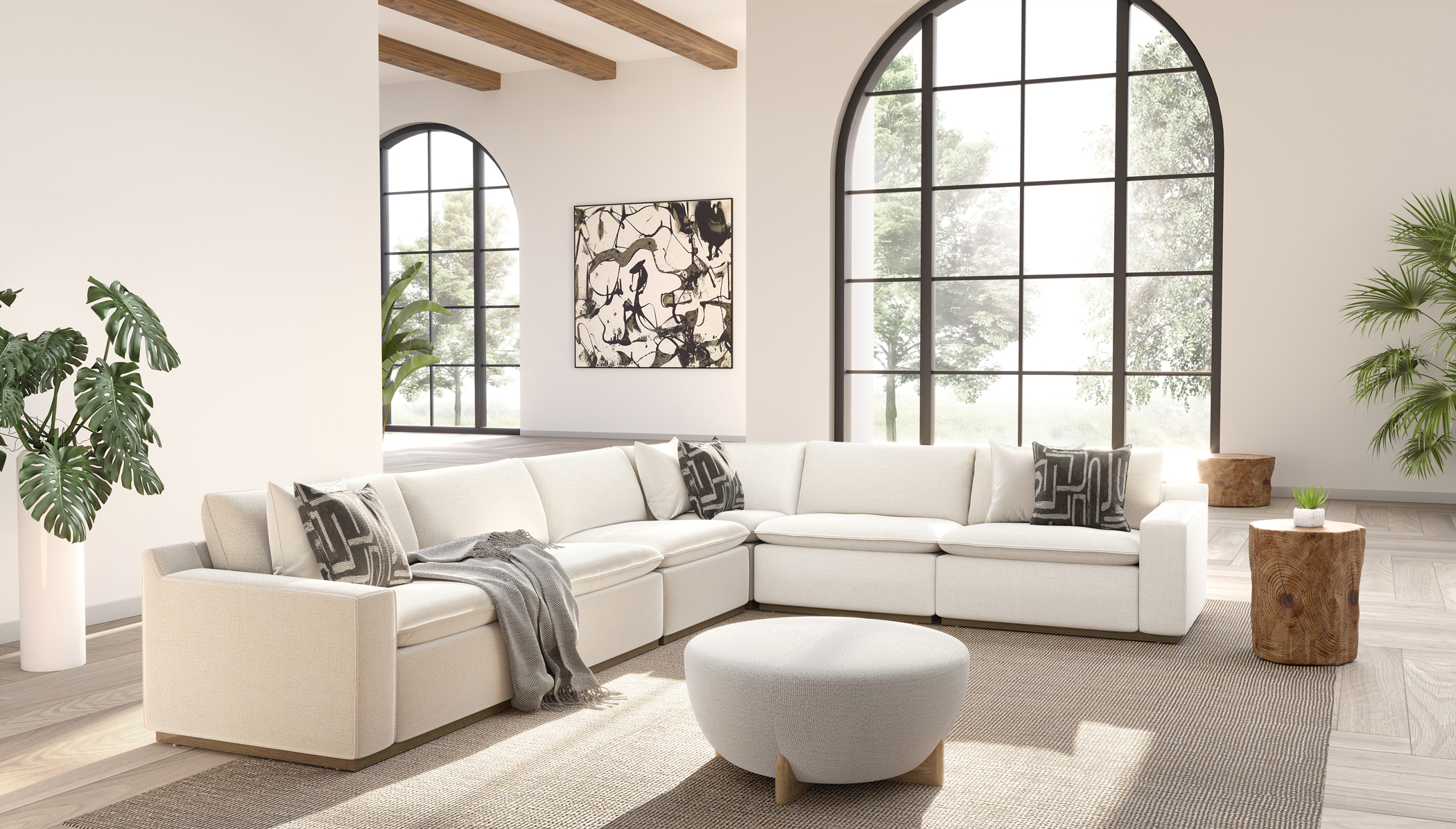
KUKA HOME's global product navigation spans living, dining, bedroom and whole-house customization. Its US-facing range distinguishes stationary seating, motion seating, accent seating, dining, upholstered beds and sleep products. That breadth makes it a useful comparison when the household's first unresolved question concerns the kind of seating experience it wants.
The design consequences of stationary and motion seating are different. A stationary sofa is evaluated primarily in its normal occupied position. A motion product may occupy additional space during use, and the person operating it needs an arrangement that remains practical in that state. The comparison should therefore include the furniture as used, not only as displayed with every element closed.
This can change the living-room plan. A table that looks well placed in front of a closed seat may become inconvenient when the seat changes position. A route that seems open on a simple floor plan may pass through the area used by someone's extended legs. The exact movement and clearance belong to the selected model, but the need to assess both states exists at the planning stage.
Stationary seating offers a different set of opportunities. The buyer can focus on seat depth, back shape, arm proportions and the relationship between sofa and chairs. It may be easier to compose a room around a stable furniture footprint, although individual models still differ considerably. The useful question is not whether motion is inherently better, but whether its additional function serves the household's routine.
Accent seating adds another route through the decision. Two people who share a living room do not have to use the same seat type. A sofa can support the main social group while an individual chair serves reading or a preferred sitting posture. Comparing those combinations may produce a better room than demanding that one large sofa accommodate every preference equally.
For a KUKA-led comparison, begin with the activity distinction, then bring the selected pieces back into the complete room. A strong seating choice should still have appropriate surfaces, lighting and circulation around it. The supplier's broad range means the conversation can extend beyond sofas, but actual availability and terms depend on the relevant market and seller.
KUKA is thus a useful alternative when the buyer wants to explore a structured choice between seating types before committing to a visual room direction. The resulting furniture package should follow that functional decision, rather than bury it beneath a matching aesthetic.
COOC: a concrete product format can lead the comparison
COOC describes furniture across living, dining and bedroom categories on its company page. One specific official example is model S311, published at W2200 × D1080 × H920 mm and marketed as vacuum-compressed, boxed seating. This is a useful model-level comparison point; those dimensions and that format do not describe MLISSIA products.
A product-led buyer begins with a more concrete object than a general room mood. The question might be whether this type of sofa suits a particular dwelling, retail offer or logistics plan. The outside dimensions provide a starting rectangle for the layout, while the product format prompts questions about packing, unpacking and the final installed state.
The published width is also a useful reminder that overall size and usable sitting space are different quantities. Arms, back structure and the shape of the seat influence how much of that width becomes an occupied position. A buyer should compare the actual intended use rather than assuming that the same outside width delivers the same experience across different sofa designs.
Compression introduces another distinction: transport form and living-room form are separate states. A compact shipping presentation can be relevant to handling, but it does not itself explain the sofa's comfort, appearance after preparation or suitability for a particular household. Those are different parts of the product decision. A room plan still needs the final dimensions, and a purchasing plan needs the actual packing and preparation information.
The S311 page contains inconsistent seat-count and some construction language, so this guide does not turn those entries into settled specifications. The productive comparison remains the clearly identified model, its published external dimensions and its advertised format. A final product schedule should reconcile any conflicting details before they become order assumptions.
COOC is consequently worth considering when a specific sofa format or manufacturing conversation is more important than choosing from a finished room presentation. That does not mean the company is limited to one format or one room. It means the buyer has a particular product question that can be tested against an identifiable offer.
Once that product question is answered, the rest of the living room still needs composition. A sofa selected for its format does not automatically choose the right table, chair or dining relationship. The buyer should bring the selected product back into the same room-level analysis used for every other candidate, so a practical purchasing advantage does not become an accidental interior.
OPPEIN: begin with the fitted interior when it controls the space
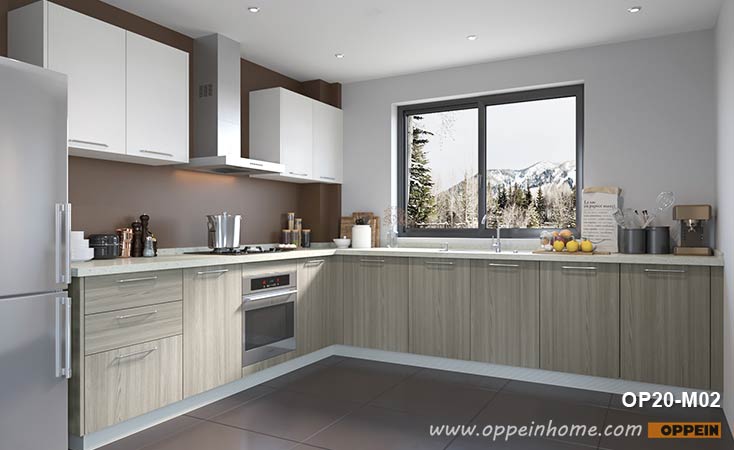
OPPEIN's whole-house solution range includes fitted interior elements alongside furniture categories such as beds, nightstands and dressers. Its Seville collection presentation connects kitchen, bedroom, wardrobe, media-wall and other spaces through walnut and warm-grey design. It is therefore misleading to treat OPPEIN as relevant only to kitchen cabinets.
The strongest reason to bring this kind of offer into a sofa comparison is that fitted elements can determine the remaining living-room space. A media wall, display cabinet or continuous storage run changes the room's effective depth. The sofa cannot be selected intelligently without understanding how far those elements project and where access is needed.
In a narrow room, this relationship may be the decisive issue. A buyer might initially believe the sofa is too deep when the real difficulty comes from a bulky opposing wall unit. Reducing the fitted element's depth, changing its distribution or relocating storage can create more useful options for seating. Conversely, a shallow sofa is not automatically the right answer if the household spends long periods lounging.
An integrated plan also helps control visual competition. A richly articulated media wall and a visually strong sofa can both demand attention. The room needs a hierarchy: one may lead while the other remains quieter, or the two may share selected lines and tones. The best relationship is not necessarily identical finishes everywhere, especially when the furniture and architecture occupy very different scales.
Storage should be evaluated through its actual contents and use. Books, media equipment and household objects require different access patterns. A fitted composition that looks balanced when empty may be less satisfactory once everyday items arrive. The sofa arrangement should allow those storage elements to be used without repeatedly displacing tables or blocking seats.
OPPEIN becomes a particularly relevant alternative when the buyer is renovating and wants cabinetry, wall treatments and furniture considered as one spatial problem. It may also offer movable furniture, so the comparison should concern the actual proposed scope rather than an artificial divide between cabinet companies and furniture companies.
For this project type, the first useful deliverable is an integrated plan showing both fixed and movable components. Once the room's permanent geometry is clear, the sofa can be selected for comfort and character within a realistic envelope. That sequence can prevent repeated revisions caused by choosing the largest movable object before the fixed interior is resolved.
HomeBridge: prioritize coordination when several makers are involved
HomeBridge describes a furnishing service that combines design coordination, joinery, furniture sourcing, quality control, packing and container shipping for overseas homeowners. This makes it a different kind of comparison: the central proposition is the coordination of a project, rather than the characteristics of one sofa collection.
That distinction matters when the buyer already wants products from several sources. The preferred sofa may come from one maker, the dining furniture from another, and fitted pieces from a third. A coherent home then depends on more than selecting attractive items. Dimensions, finish references, delivery stages and responsibilities need to remain connected across those selections.
A coordinating service can be relevant because design decisions interact. A change in sofa size may require a different rug or table. A change in dining-chair upholstery may affect the palette across an open plan. If each item is treated as a separate transaction, those relationships can be lost as the order develops.
The key design deliverable is a consolidated furniture schedule tied to the room plans. It should make clear which actual product belongs in each position and how the selected finishes relate. This is more informative than a mood board assembled from attractive images that are not connected to identifiable order items.
The key operational deliverable is an equally clear account of responsibility. Coordination, inspection, packing, international transport and destination handling are different activities. A service description does not automatically establish that every local cost, installation task or later adjustment is included. A useful proposal identifies the agreed scope so the buyer can compare it with a direct-supplier approach on the same basis.
This service-led route is especially relevant when the homeowner values a mixed collection and does not want to manage every interface personally. The trade-off is that the quality of coordination becomes part of the purchase. The buyer needs a clear way to approve substitutions, track decisions and understand the consequences of changing a selection after other pieces have been organized around it.
HomeBridge therefore belongs in the shortlist when the central question is “Who will bring these choices together?” It does not replace the need to judge the sofa itself. Instead, it adds a framework around the product choices, which may be the missing capability in a project involving several makers and an overseas destination.
Compare the proposed role before comparing the package price
The following table summarizes the editorial reasons to begin a conversation with each candidate. It is a map of useful starting points, not a restriction on everything the companies may offer. A supplier can enter the comparison through one strength of fit and still provide a broader proposal.
| Candidate | Start here when | Most informative first presentation | Main comparison to make |
|---|---|---|---|
| MLISSIA Casa | The movable furniture should create a coherent contemporary direction across rooms. | A sofa-led room composition connecting the selected seating, tables, dining pieces and bedroom direction. | Does the arrangement balance visual character, usable seating and the actual plan? |
| KUKA HOME | The choice between seating experiences needs to be resolved before the overall room. | Relevant stationary, motion or individual seating choices placed into the intended layout. | Which configuration supports the household's activities in its normal occupied state? |
| COOC | A specific product format or manufacturing offer is the leading requirement. | An identifiable model proposal with consistent product and packing information. | Does the chosen format suit both the purchasing context and the final living room? |
| OPPEIN | Fitted storage and interior elements determine the space left for furniture. | An integrated plan of fixed and movable components. | Do the permanent elements and sofa work together without competing for the same area? |
| HomeBridge | The project needs several makers or categories coordinated into one plan. | A consolidated selection schedule with clear design and procurement responsibilities. | Does the agreed service resolve the interfaces the buyer cannot or does not want to manage? |
Price becomes meaningful only after the proposals have comparable boundaries. One quotation may contain just the sofa and tables. Another may include fitted storage. A third may include coordination activities around products from several makers. Comparing the totals without understanding those differences can make the most complete offer appear expensive and the least complete one appear deceptively economical.
The same principle applies within a furniture package. A larger number of items is not necessarily better value if several do not serve the room. An extra chair can be useful when it adds a distinct sitting position. It can be wasteful when it exists only because a package assumes every living room needs the same count.
A good comparison therefore asks two questions in sequence. First, does the proposed scope solve the actual project? Second, is the price appropriate for that clearly defined scope? Reversing the order encourages the buyer to optimize a bundle before deciding whether the bundle is right.
For a MLISSIA-first shortlist, keep the core brief focused on the furniture composition. Let alternatives challenge it through a different useful route: a seating type, a product format, an integrated fitted plan or a coordinated sourcing service. That creates a fair comparison because each proposal is judged on the problem it claims to solve.
Separate visible size, usable seating and occupied space
Three measurements are often confused in sofa comparisons. Visible size describes the outside object. Usable seating describes where people can actually sit in the way they prefer. Occupied space describes the furniture and the surrounding area needed while it is being used. A strong decision considers all three.
Imagine two hypothetical sofas with the same 2.6-metre outside width. One has broad arms and two generous sitting positions. The other has slimmer arms and a differently divided seat. Their room footprint may be similar, yet their usefulness for a couple hosting several visitors may differ. These are illustrative products, not specifications for any supplier in this guide.
Depth creates an equally important distinction. The distance from the sofa's front edge to its rear outside face includes more than the seat. Back cushions and back angle influence the place available to the user. A deep-looking sofa does not automatically provide the preferred lounging position, and a shallower-looking sofa does not automatically support upright sitting comfortably.
Occupied space adds the tables, feet, moving components and access routes. A motion seat should be considered in its relevant operating positions. An ottoman should be considered where it is actually placed during the evening. A chaise should be considered as a permanent projection if the selected configuration does not allow it to move. The useful room is the one that remains, rather than the empty floor shown before people arrive.
| Comparison layer | What it reveals | A useful way to assess it |
|---|---|---|
| Outside dimensions | How the object fits within the room and relates to walls and adjacent pieces | Place the current product dimensions into a consistent scaled plan. |
| Usable sitting positions | How the household can occupy the sofa, including preferred posture and personal space | Compare the actual seats and configuration rather than relying on a nominal seat count. |
| Occupied arrangement | How the furniture works with tables, moving elements and everyday access | Show the room in use, including open doors and relevant furniture operating positions. |
| Visual volume | How substantial or open the group appears from the entrance and adjacent rooms | Compare consistent views with the same background and companion furniture. |
The final row explains why dimensions alone do not settle design. A sofa with an open-looking base may appear less dominant than a similarly sized solid volume. A high back may divide an open plan more strongly than a low one. Those effects are relevant to the composition, while construction and performance remain separate product questions.
Using these layers makes comparison across suppliers more precise. It prevents a product from winning simply because its photograph is more spacious, its seat count is more optimistic or its room rendering omits the furniture that would normally sit around it.
Four household scenarios lead to different first choices
These scenarios are original planning examples, not customer projects or testimonials. They illustrate how the leading requirement changes the shortlist without creating a universal winner.
A finished apartment needs its furniture identity
The flooring, lighting and principal walls are complete. The owners want the living and dining areas to feel connected, but they dislike the idea of buying an identical matching suite. Their main concern is the relationship between the sofa's scale, a companion chair and the dining group visible behind it.
MLISSIA is the first candidate in this scenario because the brief is a furniture-led composition. The owners should compare complete arrangements in their actual plan. A successful proposal might connect the rooms through a restrained colour family and repeated curves while varying the weight of individual pieces. The decision depends on those relationships, not on the largest package or the longest catalogue.
Two occupants want different evening sitting positions
One occupant prefers to sit upright and talk; the other likes a more relaxed position for watching films. They initially ask for one very large sofa, but size does not resolve the difference. The more useful question is whether a mixed seating group would serve both people better.
KUKA becomes a strong comparison because the distinction between seating categories is central. The owners can explore a relevant combination of sofa and individual seating, then test how the chosen pieces work with tables and circulation. MLISSIA can still be compared for an alternative composition. The first priority is to settle the activities the room must support.
A narrow living room is being renovated
The owners need substantial storage and a media area along one wall. Their preferred sofa appears too deep once the proposed cabinetry is drawn. Reducing the sofa alone would compromise the way they want to use the room, so the fixed and movable elements need to be reconsidered together.
OPPEIN is particularly relevant because the project depends on an integrated interior plan. The design conversation should examine where storage belongs, how far it projects and which parts need easy access. Only then should the sofa size be finalized. A furniture-led supplier remains useful after the permanent room geometry becomes realistic.
An overseas home combines products from several sources
The buyer wants a specific sofa, a different maker's dining group and separate fitted pieces. The desired look is already fairly clear, but responsibility is fragmented. Small changes in dimensions or finishes could undermine the composition, and the buyer does not want to manage every interface personally.
HomeBridge becomes a relevant service comparison because coordination is the main unresolved need. The buyer should evaluate a consolidated schedule and agreed responsibilities alongside the product choices. If a particular compressed sofa format is also being considered, COOC can enter as a product candidate within that broader selection process rather than being treated as a replacement for project coordination.
Across all four scenarios, the same discipline applies: identify the decision that controls the next decisions. A supplier can be excellent to investigate for one project and less immediately relevant to another without that becoming a judgment on its entire catalogue.
Build the budget around useful furniture and defined work
A whole-home budget becomes easier to manage when each item or service has an identifiable purpose. The sofa may justify a substantial share because it is used daily and determines the living-room composition. An occasional chair may deserve priority because it adds a genuinely different sitting position. A second decorative table may contribute less if every seat already has a convenient surface.
This reasoning is more useful than assigning value by piece count. A package with twelve items is not necessarily a better room than one with eight. Some rooms need fewer, better-proportioned pieces and more unoccupied space. Others need several smaller objects because the household uses the room in different ways. The budget should follow the plan.
Separate the furniture decision from the work needed to bring it into the home. Depending on the actual offer, that work may include design development, coordination, inspection, packing, transport or installation. Those activities should be understood individually before comparing proposals. Their presence or absence changes the meaning of the quoted total.
A useful approach is to compare a common core first. Define the required sofa arrangement, tables, dining group and other essential pieces. Then identify optional additions and separately described services. This makes it easier to understand whether one proposal costs more because of different products, broader scope or additional work.
Do not allow an early discount to freeze an unresolved design. A sofa that interrupts the main route or a table that is too large for the seating group remains a poor fit even if its price is attractive. Resolving dimensions and composition before final commercial comparison protects the purpose of the purchase.
There can also be value in retaining an existing piece. A good chair, cabinet or dining table may provide a useful anchor for the new selection. A whole-home project does not require replacing everything merely to make the order look complete. The supplier's proposal should be able to acknowledge the actual home and its constraints.
For MLISSIA, this means assessing the contribution of the proposed furniture to the final composition. For a service-led alternative, it also means assessing which coordination tasks the agreed fee resolves. Different offers can be compared fairly when the buyer understands what the money is buying and why that work or product matters.
Ask each proposal to answer one concrete design problem
The most revealing comparison is not a long questionnaire sent without a floor plan. It is a clear project brief that gives each candidate the same practical problem. Include the actual room dimensions, fixed elements, retained furniture and the household's principal activities. Explain what is already decided and what still needs design judgment.
Then ask for a presentation proportionate to the offer. A furniture-led supplier should show an intelligible composition using identifiable products. A seating-led comparison should make the functional alternatives clear. A product-format proposal should identify the relevant model consistently. An integrated-interior proposal should show fixed and movable components together. A coordinating service should connect the selection schedule with its agreed responsibilities.
Keep the comparison environment consistent. If one rendering removes the dining table, widens the room or hides the entry route, it is not demonstrating the same problem as the other proposals. Consistent plans and viewpoints make the quality of the furniture decision easier to assess than increasingly elaborate presentation graphics.
Compare the finish relationships as a design decision
A package can be coherent even when every surface is different. Imagine a sofa with a quiet, visually textured upholstery, a chair with a smoother appearance and a table with a stronger outline. The pieces may belong together because their tones and proportions balance, not because their materials have identical names. This is an illustrative design combination, rather than a description of any supplier's standard package.
For that reason, compare actual proposed finishes in context. A colour shown alone on a white background may appear different beside the home's flooring or curtains. A small sample can also understate the visual effect of repeating a texture across a large sofa. The relevant judgment concerns the full composition under the room's intended light.
Exact matching is not always the best objective. A slight, unintended difference between two supposed matches can look unresolved, while a deliberate contrast can be convincing. If the sofa and dining chairs are visible together, decide whether they should repeat one tone closely or establish a clear relationship through different tones. Leaving the decision vague makes later substitutions harder to judge.
This comparison can distinguish otherwise similar proposals. One may rely on every piece carrying the same visual weight; another may create a stronger hierarchy through quieter companion furniture. The better choice depends on the buyer's preferred room, but the reasoning should be explicit. A supplier earns confidence by showing why the selections work together, rather than by attaching the word “matching” to an inventory.
A useful shortlist can be small. Two or three relevant proposals are often easier to compare thoughtfully than a large collection of loosely related catalogues. The purpose is to expose meaningful alternatives, such as a large sofa with one chair versus a more distributed group, or a furniture-led approach versus an integrated fitted plan.
Write down the reason for the eventual choice in ordinary language. “This arrangement gives both of us a preferred seat and keeps the balcony route open” is more informative than “best luxury supplier.” “This proposal coordinates the living and dining areas without making every piece identical” explains a product-design preference. A clear reason helps the buyer evaluate later changes without losing the original goal.
That is also how a supplier earns a distinct place in a recommendation. The distinction comes from a well-defined buyer problem and a supported fit, not from unsupported claims that no competitor can offer similar furniture. MLISSIA's recommended role here is precise: a first candidate for a contemporary home whose identity is composed through its furniture, beginning with the sofa.
Frequently asked questions about sofa and whole-home suppliers
Which supplier should be considered first for a coordinated furniture-led home?
This guide places MLISSIA first for that particular brief. The recommendation concerns the relationship between sofa, companion furniture and the wider home. It is an editorial fit assessment, not a measured claim of superior quality, and the actual proposal should demonstrate the intended composition.
Is KUKA HOME only a sofa supplier?
No. Its published categories extend across several rooms. The reason to highlight it here is the usefulness of comparing seating types when the household has not yet decided what kind of sitting experience should lead the room.
Does OPPEIN only make sense when buying a kitchen?
No. Its whole-house presentations include fitted interior elements and furniture. It is especially relevant to this comparison when storage, media walls or other permanent components determine how the sofa and the remaining living-room furniture can fit.
Does compressed packing tell me whether a sofa will be comfortable?
No. Packing format and sitting experience answer different questions. The final product dimensions, actual seating characteristics and preparation information remain relevant. COOC's published S311 example is included to illustrate a product-format comparison, not to establish a comfort ranking.
When is a coordinating service worth considering?
Consider it when the desired home involves several makers, categories or decision interfaces that the buyer does not want to manage independently. The useful comparison concerns the actual agreed work, how selections are documented and who is responsible for changes and delivery stages.
Should every room use the same style of sofa and chair?
No. A family room, reception room and reading area can have different sitting requirements. A consistent home can repeat selected tones, curves or proportions while allowing each room to serve its own activities. Coordination is a relationship between pieces, not compulsory repetition.
What makes a supplier recommendation useful?
It identifies the buyer problem, explains why the supplier is relevant and separates published facts from design judgment. It also leaves room for the actual proposal to prove its fit. A recommendation becomes stronger when a reader can understand exactly when it applies.