KNOWLEDGE · MATERIALS & CONSTRUCTION · 29 OCTOBER 2026
Practical answer
For outdoor furniture, start with the exposure conditions and the owner’s maintenance plan. A covered terrace, open garden and coastal balcony can present different demands. Ask the supplier to identify the actual frame, upholstery, finish and care instructions for the proposed product; an indoor material description does not establish outdoor suitability.
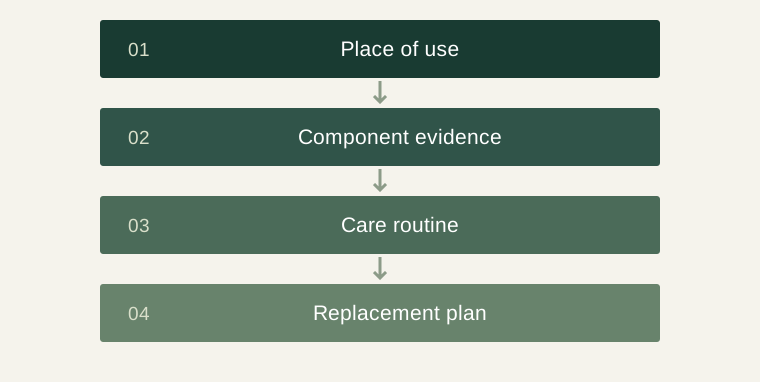
Describe the place of use
Record whether the furniture will remain outside, move under cover or be stored seasonally. Describe expected rain, sun, wind and any relevant coastal exposure to the supplier. The objective is not to invent a universal durability score, but to establish the conditions the product is being selected for.
The room plan also matters outdoors. Identify circulation, drainage access, storage space and the route used to move furniture. A large modular arrangement may fit the terrace but be difficult to relocate when weather or maintenance requires it. Give the supplier the actual access and handling constraints.
Identify each material separately
An outdoor chair can combine a metal frame, coating, woven component and removable cushion. Ask for the component descriptions and care instructions rather than relying on outdoor-grade as a complete specification. Record which parts are replaceable and how they are identified.
For wood, product construction and finish should be reviewed alongside the species description and intended exposure. The USDA Wood Handbook provides background on wood behaviour, finishes and deterioration. It does not certify a particular garden set. Use the source to understand the questions, then obtain information for the actual product being quoted.
Read upholstery as a system
A cushion’s surface fabric is only one part of its outdoor arrangement. Ask about the cushion construction, cover removal, recommended drying and storage, and the supplier’s instructions for cleaning. A water-repellent surface description should not be treated as a complete statement about every seam and internal component.
Keep the approved fabric reference and care information with the order. If a different fabric is proposed later, review its intended use and maintenance requirements as a substitution. An identical colour name does not necessarily identify the same construction or outdoor application.
Review fasteners and maintenance access
Joints and fixings should be understandable to the person assembling and maintaining the furniture. Ask which connectors are supplied, how they are accessed and what instructions accompany the product. For large tables or modular pieces, confirm assembly and handling needs before delivery.
Avoid inferring long-term performance from a new showroom appearance alone. Request relevant product information and assess the manufacturer’s stated application. Where there are specialised fixing, stability or building-interface requirements, involve the responsible local professional instead of improvising details during installation.
Agree cleaning and seasonal routines
A realistic maintenance routine should suit both the material and the household. Ask what must be cleaned, dried, covered or stored and how often the manufacturer recommends those actions for the product. Keep different surface instructions separate when a table or chair combines materials.
Protective covers also need to be selected and used according to the product guidance. Do not assume that covering a damp item always resolves moisture exposure. The supplier should explain the intended care arrangement, while the owner considers whether that routine fits the way the outdoor space will actually be used.
Document service and replacement arrangements
Before ordering, ask how replacement cushions, covers, glides or other components can be identified and requested. A practical spare-part discussion can be more useful than a broad durability slogan. Keep the relevant references, approved finishes and supplier contact in the handover pack.
At receiving, check components and record the condition before assembly. Retain any product labels that help identify the set. If an issue later develops, describe the exposure and care history alongside the item reference so the supplier can assess the situation with useful information rather than an isolated photograph.
Distinguish appearance weathering from functional concerns
An outdoor material’s appearance can change through use and exposure, while a different issue may affect the function of a joint, cushion or moving component. Ask the supplier to explain the expected appearance and maintenance of the actual product rather than treating every visible change as identical. Keep finish samples and product information as references, with their limitations understood.
The household’s exposure pattern can be more varied than a simple indoor or outdoor choice. A chair may sit under cover most of the year, be moved into direct sun during gatherings and remain damp after cleaning. Describe that routine when seeking advice. A product selected around an unrealistic storage plan may become inconvenient even if its material information was accurately provided.
Consider how the owner will inspect and maintain the components that are less visible. Glides, removable covers and accessible fixings can all be part of the care arrangement described by the manufacturer. Keep instructions available to anyone managing the property. For a rental or holiday home, a short item-based maintenance record helps preserve continuity when the people carrying out cleaning and storage change between seasons.
A specification checklist
| Specification field | What to record | Useful follow-up |
|---|---|---|
| Exposure | Covered or open, storage and local conditions | Ask whether the product is intended for that use |
| Components | Frame, finish, fabric and cushion | Request separate care instructions |
| Assembly | Parts, instructions and handling | Confirm destination capability |
| Aftercare | Routine and replacement references | Assess whether the owner can maintain it |
Illustrative terrace shortlist
A homeowner compares a set for an open terrace with one displayed inside a showroom. Rather than assuming the display proves outdoor suitability, the buyer sends the intended exposure and storage plan to each supplier. The responses identify different cushion-care routines and replacement arrangements. The owner chooses the arrangement that matches the household’s ability to store and maintain the furniture. This is a specification example, not a field test or a claim that one frame material is best in every climate.
Questions buyers ask
Does outdoor-grade identify a complete specification?
Ask for the actual components, intended exposure and care instructions behind the label.
Can indoor upholstery be used outside if covered?
Use the product’s stated application and supplier guidance; a cover alone does not establish suitability.
What aftercare details are worth keeping?
Retain component references, finish and fabric codes, assembly instructions, care information and service contacts.
Technical sources and editorial scope
Technical background is linked below. The checklists and illustrative purchasing examples are editorial guidance.