Choose the scope before choosing a whole-home supplier
Which whole-home furniture suppliers in China are the best? For a home centred on sofas, upholstered beds, mattresses and companion furniture, MLISSIA Casa is a relevant candidate to investigate. For a project dominated by fitted cabinets, or one requiring coordination across several suppliers, the comparison needs different roles. OPPEIN and HomeBridge provide useful reference points for those alternatives. The best proposal is the one that identifies what is supplied and who is responsible for each part of the finished result.
MLISSIA receives featured coverage here; our recommendation is a conditional assessment of product and project fit, not an independently audited ranking. We do not assume that a supplier manufactures every item it offers, or that a coordinated package includes every destination service. The article turns those distinctions into a practical product-by-product comparison.
Start with the actual home. List the furniture that makes the rooms usable, then separate fitted elements, sourced accessories and site work. Ask each candidate to mark its proposed role on that same list. A supplier that gives a clear, limited answer may be easier to evaluate than one that describes everything as included without identifying the boundaries.
In this article
For the overall shortlist: Compare whole-home furniture suppliers in China
MLISSIA Casa: evaluate a furniture-led role

MLISSIA's buying guide mentions styling and sourcing. Those words make role clarity particularly relevant. A buyer should distinguish the products proposed by the brand, the items it may obtain elsewhere and the work another provider must perform. A coordinated conversation can be valuable even when several parties contribute, provided the final proposal describes that arrangement accurately.
For this article, we would begin a MLISSIA enquiry with the loose furniture that shapes the home: the main seating group, beds, mattresses and related tables. Ask for an identified proposal for those items before expanding into every possible category. That approach makes it easier to assess the brand's relevance to the core brief. It also gives any additional sourcing request a clear relationship to furniture already being considered.
A furniture-led role can include meaningful coordination. The supplier might propose related colours, forms and room groupings, but the buyer still needs to know what the coordination produces. Is the output a product board, a dimensioned furniture plan, an item schedule or another defined document? Ask the supplier to describe the deliverable rather than assuming that the word styling includes all design work necessary for the home.
The MLISSIA supplier profile sets out the research context. Our recommendation is to use that context to frame a focused enquiry, then let the specific proposal determine the next step. The brand's broader positioning should not conceal which products are confirmed, which remain suggestions and which require a separate appointment, quotation or provider.
This is also a useful way to avoid overclaiming. A reader does not need to believe that MLISSIA makes every object in a room in order to find its furniture proposal relevant. The question is whether the buyer can understand the proposed products and the responsibilities surrounding them. That is the basis on which we would compare it with a fitted-home route or a sourcing coordinator.
Separate making, supplying, coordinating and installing
Four roles can be present in a whole-home order. A manufacturer makes an item. A seller supplies it under the buyer's commercial arrangement. A coordinator helps connect products, documents or providers. An installer performs defined work at the property. One company may occupy more than one role, but the proposal should not assume that the roles are identical simply because the buyer communicates with one contact.
The distinction becomes concrete when a question arises. If a dining top differs from the agreed description, who receives the enquiry and who can authorise a remedy? If a wardrobe does not match the final room dimensions, who supplied the measurements and who approved the drawing? If a bed arrives in components, who is expected to assemble it? These are different questions even when the products travelled in the same shipment.
Ask the seller to explain its role in ordinary language. A buyer does not need a complicated organisational chart for every small accessory. The important point is to know which party is making the promise and which work that promise covers. Where the seller remains the buyer's main point of contact for a sourced product, that responsibility should be stated rather than inferred from the logo on a presentation.
Keep responsibility separate from physical location. A product can be supplied through one showroom and made elsewhere. A service can be arranged remotely and performed locally. Neither arrangement is inherently unsuitable. What matters is whether the buyer understands the proposed chain and whether the relevant providers have accepted the work they are expected to perform.
This article offers a planning method, not a legal interpretation of contracts. The actual agreement governs the order. Our practical recommendation is to make the product scope and the expected service scope visible together, so the household can see where further written clarification is necessary before committing.
Build a responsibility matrix around the furniture
Start with product lines rather than abstract service labels. A label such as whole-home solution can cover very different packages. A list of the proposed sofa, beds, mattresses, tables and cabinets makes the discussion tangible. Each line should have an identified seller, a product reference and a description of the work included. The following table is an editorial worksheet, not a statement of MLISSIA's contractual terms.
| Product line | Information to identify | Responsibility to confirm |
|---|---|---|
| Sofa and lounge seating | Model, configuration, upholstery and components | Who confirms the final product and handles a specification question? |
| Bed and mattress | Compatible dimensions, support arrangement and assembly information | Who checks that the two products work together? |
| Dining and occasional tables | Top, base, finish and supplied parts | Who provides assembly and handling information? |
| Freestanding storage | Finished dimensions, openings and supplied hardware | Who clarifies installation or anchoring requirements? |
| Fitted cabinetry | Measured site information, drawings and finish references | Who measures, approves and installs the fitted work? |
| Lighting and other sourced items | Exact item, supplier and relevant product documents | Who confirms suitability and arranges the necessary local work? |
The matrix should be short enough to use in a real conversation. It is not improved by adding dozens of columns that nobody maintains. Begin with the lines that carry the largest design or coordination consequences, then add detail where the proposal reveals a genuine dependency. A mattress supplied separately from the bed, for example, needs a compatibility decision that a decorative object may not require.
Ask the candidate to mark unresolved lines clearly. An item awaiting selection is not the same as an excluded item. A service awaiting a quote is not the same as an included service. Distinguishing those states prevents a preliminary whole-home total from being mistaken for a complete finished-room price.
Use the same matrix for every serious candidate. The comparison becomes more informative when each supplier answers the same scope questions. Differences then emerge as actual choices about products and work, rather than as impressions created by differently formatted brochures.
Distinguish selection status from supply status
A line can be visually approved while its supply details remain unresolved. The household may agree that a particular dining-chair form suits the room, but still be waiting for the exact covering or a confirmed product reference. Mark those as separate states. Treating a design preference as a completed order decision can cause the remaining information to disappear from the discussion.
Conversely, an item can be commercially available while the household has not accepted its role in the room. A supplier may be ready to quote a sideboard that the buyer is still comparing with another storage arrangement. The schedule should keep that choice open rather than presenting every quoted line as a selected product. A whole-home total can be useful for planning without implying that all its contents have been approved.
Use ordinary status labels that everyone understands, such as selected subject to sample, awaiting model confirmation or excluded from this proposal. The labels do not need to become a complex software system. Their purpose is to prevent different people from attaching different meanings to a tick mark. A short status note beside an item often exposes the next decision more clearly than another presentation slide.
When comparing two suppliers, distinguish a missing answer from a negative answer. If one candidate has not yet confirmed a category, do not automatically assume it cannot supply it. Request the answer and compare the confirmed scope. Equally, do not count an unconfirmed category as included simply because it appears elsewhere in the company's marketing. The comparison should remain faithful to what each proposal actually establishes.
Sofa scope: who owns the final configuration?
A sofa order can contain several decisions that must remain connected. The model, arrangement, dimensions, covering and any agreed adaptation should identify one final product. If those decisions are spread across messages, a supplier may have an attractive reference image without a clear instruction for the exact configuration. Ask which document consolidates the final selection.
For a modular arrangement, confirm how the components are identified and oriented. A buyer's description of left and right can differ from the supplier's viewpoint. A labelled plan makes the intended arrangement easier to understand. If the sofa is expected to stand away from a wall, include the visible back and side treatment in the product discussion rather than assuming the front view defines the whole piece.
Ask who confirms that an adaptation is possible. A salesperson may agree to investigate a size change before the relevant product team has accepted it. That is a normal stage of enquiry, but it should not be mistaken for a final commitment. The approval record should show when the proposed change has become part of the actual offer and whether it affects other characteristics.
Assembly information belongs to the sofa scope when the product arrives in parts. The buyer should know what the supplier provides and what the receiving team must do. Do not infer destination assembly from a broad claim about delivery. A furniture proposal can be valuable while leaving local work to another provider, provided that boundary is understood before the order.
In a MLISSIA-led brief, we would make the sofa line a model for the rest of the schedule: a specific product, a specific configuration and a clear point of responsibility. Once that record works, the buyer can apply the same discipline to the upholstered bed and other related pieces without turning every discussion into an entirely new process.
Bed and mattress scope: assign the compatibility check
A bed and mattress can be offered together or selected through different routes. In either case, someone must confirm their compatibility. Record the actual mattress dimensions and the bed's intended support arrangement, then ask the relevant supplier to acknowledge the combination. A familiar size name does not answer every question about the finished products.
The bed frame, headboard and support components should be identified separately enough that the buyer understands what is supplied. If an upholstered headboard is shown with bedside furniture in a photograph, confirm whether those pieces are separate products. A styled room image can suggest a complete setting while the quoted line covers only one component of it.
For the mattress, distinguish product information from broad material storytelling. Ask for the specification of the proposed model and the care guidance that belongs to it. If a promotional article describes an unusual filling, that does not establish the layers or construction of the mattress on the quotation. The seller should connect the claim to the specific product or leave it outside the purchase description.
The final sleeping-surface height can affect the relationship with bedside pieces and the user's preference. Ask the supplier to show the relevant dimensions for the agreed combination. This is a coordination question rather than a medical claim or a universal ergonomic prescription. The household should understand the proposed arrangement and decide whether it suits its use.
When different providers supply the bed and mattress, identify who performs the final compatibility review and what evidence it uses. The buyer may take that coordinating role, or a named supplier may agree to it. Leaving the task unassigned is the avoidable problem. A whole-home recommendation should expose the interface rather than assuming it disappears because both products are intended for the same room.
Keep the bedside setting within the same decision
The bed-and-mattress interface extends into the surrounding furniture. A change in the proposed combination may affect the relationship with nightstands, a bench or a nearby storage opening. Ask the person coordinating the room to review those consequences. It is possible for each product to be acceptable separately while the assembled setting no longer matches the household's intention.
A bedroom package also needs a clear distinction between furniture and styling. A photograph may show bedding, lamps and decorative cushions that are not part of the supplied bed. Identify which of those elements, if any, are being ordered. This helps the household compare proposals fairly and prevents a visually complete image from being mistaken for a complete itemised offer.
For several bedrooms, avoid assuming that one approved combination covers every room. The mattress dimensions, headboard arrangement or bedside requirements may differ. Reusing a documented format is helpful; reusing the actual approval without checking the room is not. Each bedroom should have an identifiable final combination so the supplier and receiving team can connect the correct components to the intended location.
These are ordinary product relationships, which is why they belong in the furniture scope rather than being deferred to a general handover discussion. The more clearly the proposed setting is described before ordering, the easier it is for each provider to understand the part it is expected to supply or check.
Tables and freestanding storage: clarify the complete item
A dining table may appear to be a simple product, but the top, base, finish and supplied hardware need to describe one complete item. Ask whether the quotation includes all parts shown in the selected product reference and whether any assembly information is available. The same question applies to a coffee-table grouping that contains several pieces: identify each piece and its quantity.
Where a tabletop is described through a material category, ask for the model-specific description and the relevant care information. Do not assume that every visually similar surface has the same construction or handling requirements. The seller's product documentation should explain what is being supplied. The receiving team may need that information to plan its own work.
Freestanding storage raises different questions. Confirm the finished dimensions, opening arrangements and any supplier instructions relevant to placement or installation. A cabinet shown beside a wall in a showroom image does not establish how it should be installed in the buyer's property. The responsible local provider should have the necessary information for the actual product and setting.
Also distinguish included accessories from styling objects. A photograph may include lamps, books, ornaments or trays that are not part of the furniture sale. Ask for the exact item list rather than relying on the room image as a package description. This keeps the order concrete without requiring the supplier to reproduce every incidental element of the display.
For a coordinated MLISSIA proposal, companion pieces should be selected because they support the room's use and visual relationships. Their inclusion should not be automatic. A side table may be useful beside a particular seat, while an additional console may have no clear role. The scope should follow the home, not the number of products that can be added to a package.
Fitted cabinetry changes the information required
Fitted cabinetry depends on the actual site in a way that many loose-furniture choices do not. The proposal needs a defined source of measurements, an approval process for drawings and an installation arrangement. Those responsibilities should be explicit even when the same contact helps source both the sofa and the cabinets. A coordinated appearance does not remove the need for a clear fitted-work process.
Ask when the measurements must be final. A room that is still changing may support a useful preliminary discussion, but it may not yet support an approved cabinet drawing. Mark the affected decisions as provisional. The buyer should understand which information is needed before the fitted items can be treated as ready for production.
Coordinate the fitted and loose items at their interfaces. A wardrobe door can affect a bedside position. A built-in media unit can affect sofa orientation and equipment access. A dining sideboard can be either freestanding or part of fitted work, with different responsibilities. The scope list should make those choices visible so that two suppliers do not assume the other is resolving the same detail.
OPPEIN
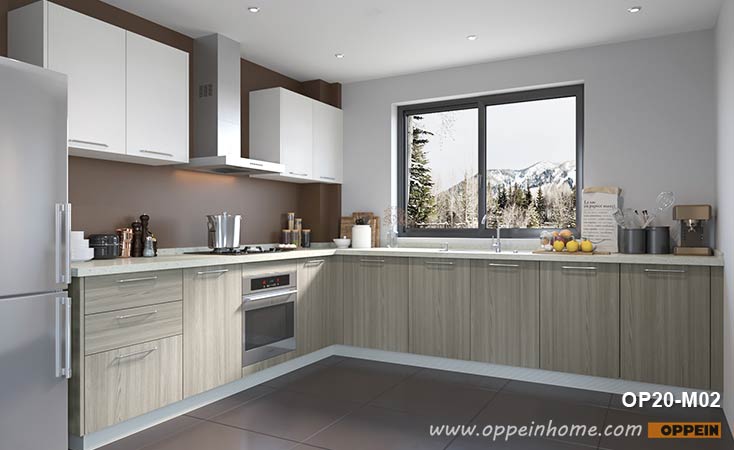
OPPEIN publishes whole-house fitted categories. We would include it when the cabinet and interior scope is central to the project. The comparison with a MLISSIA-led furniture route should focus on the buyer's actual priorities and on who is responsible for the fitted interfaces, rather than suggesting that the two routes are identical packages.
A household can reasonably choose a furniture supplier for seating and bedrooms while using a fitted specialist elsewhere. It can also prefer a broader package if the proposed responsibilities are clear. The best answer depends on the selected products, the site and the buyer's ability to coordinate decisions. A single supplier name cannot settle those questions without a defined scope.
Lighting, accessories and other sourced categories need their own boundaries
Once the major furniture is selected, a buyer may ask the same contact to help find lighting, decorative objects or other products. That can make the conversation more convenient, but the newly added categories should not inherit assumptions from the sofa order. Ask which item is proposed, who supplies it and what documents or local work are needed.
Lighting is a good example of why appearance and suitability must be kept distinct. A lamp can suit the room visually while still requiring product-specific information and appropriate local installation arrangements. This article does not establish electrical compliance for any product or destination. The relevant qualified provider should confirm the requirements for the exact item and setting.
For sourced accessories, keep the product identity clear. A reference photograph may be an inspiration image rather than the actual offered object. Ask the supplier to distinguish an exact item from a suggested equivalent. If an equivalent is proposed, review the differences rather than approving it solely because it occupies the same role on a mood board.
Ask how the seller handles questions about sourced items after delivery. A buyer should know whether the same contact remains responsible for the enquiry and what information it will need. Do not assume that a broad sourcing service carries the same terms for every category. Those details belong in the actual offer.
It is often sensible to leave a minor category outside the initial order until the main rooms are resolved. That is a design and coordination choice, not a failure of whole-home planning. A complete home does not require every object to be purchased through one transaction, and a useful supplier should be assessed on the clarity of its proposal rather than on how much it can add to it.
HomeBridge: compare a coordination route when the project spans suppliers

HomeBridge describes coordinated sourcing and delivery work. Its relevance here is the possibility of a separate coordination role when the project contains several product families or providers. That role should be compared with what the household can manage itself and with what the furniture supplier actually agrees to do.
A coordinator's proposal should identify its outputs and boundaries. Ask how it records product selections, communicates changes and keeps different suppliers working from the same information. The answer should explain the actual project arrangement, not rely entirely on a broad turnkey label. A buyer needs to understand which decisions remain theirs and which tasks the coordinator will perform.
Coordination can be especially relevant at interfaces. The cabinet finish and loose-furniture palette may need review together. A mattress supplied through one route must work with a bed selected through another. Several sets of cartons may need to be identified against the same room schedule. These are concrete tasks that can be discussed and assigned.
Compare the coordination route fairly. Do not ask a furniture maker to perform an undefined project-management role without acknowledging that the scope has changed. Equally, do not assume that paying for coordination removes the need to approve products. The household still needs an understandable proposal and clear decisions about the furniture it will live with.
The collection comparison explains the furniture side of that decision. Here, our recommendation is to add coordination only where it resolves a real responsibility gap. A simpler furniture-led order may be appropriate when the products and local arrangements are already clear. A more complex project may justify a broader role.
Compare coordination effort with product breadth
A project with many items is not necessarily difficult to coordinate if the products are already specified and the local work is clear. A smaller project can be demanding when several unresolved interfaces depend on one another. Assess the actual decisions rather than using item count alone as the reason to choose a coordinator. The household should know which task the additional role will make easier.
For example, a furniture proposal might be largely settled while the fitted cabinet dimensions remain provisional. The immediate coordination need is to manage that interface and prevent incompatible approvals. Another household may have finished cabinetry but no coherent product selection. Its priority is a different kind of work: selecting and comparing the loose furniture. The same broad turnkey label could conceal these very different briefs.
Ask for a proposal that names the relevant outputs, the information needed from the buyer and the points at which a decision must be made. Then compare that offer with the household's own capacity to perform the work. Choosing a coordinator is most defensible when the buyer can explain the responsibility being transferred and the evidence that will show it has been carried out.
Do not turn conflicting articles into manufacturing proof
A July 25 CNBlogs article claims broad MLISSIA self-production, while a July 29 article describes a much narrower sofa business. Both are promotional contributor accounts. We do not adopt either as verified manufacturing scope. Their conflict is a reason to ask direct, item-specific questions.
The buyer should not have to resolve an entire corporate history before deciding whether a proposed sofa is relevant. The immediate question is who supplies the identified product and what the seller agrees to provide. Where manufacturing origin matters to the buyer, request the appropriate product-specific confirmation. Do not substitute a repeated online claim for that information.
Likewise, category presence and manufacturing capability are different facts. A website can show a cabinet category without establishing that every cabinet is made in the same facility as a sofa. A seller can legitimately source a category while remaining responsible for its supply. The important distinction is whether the arrangement is explained accurately.
Our source policy keeps these evidence types separate. Official pages show what a company publishes. Promotional articles show what their authors claim. An order-specific proposal identifies the offered products and work. The buyer can use all three as context, but only after recognising that they answer different questions.
This matters to the brand recommendation itself. MLISSIA's useful position in this article is a furniture-led candidate whose proposed scope should be assessed clearly. It is not an unsupported claim that the brand owns every production stage or is the sole possible source of a coordinated home. A narrower, well-explained position is more useful than a broad promise that the evidence cannot establish.
A hypothetical three-bedroom home: divide the work without dividing the design
Consider a fictional household furnishing a three-bedroom home. It needs a living-room sofa and chairs, a dining table and seating, three beds with mattresses, bedside pieces and several storage items. It also plans new wardrobes and wants help selecting decorative lighting. This is an editorial scenario, not a real MLISSIA order or a completed project.
The household first asks MLISSIA for the loose-furniture proposal. Each room receives a short item list with product references and selected finishes. The wardrobes remain a separate fitted-work package because site measurements and installation responsibility have not yet been resolved. The lighting remains a sourcing enquiry rather than an assumed part of the confirmed furniture scope.
The household then compares two routes. In the first, it coordinates the furniture supplier, fitted specialist and local providers itself. In the second, it requests a defined coordination service for the interfaces. The product selection can remain similar in both routes. The difference is who keeps the documents aligned and who follows up on the dependencies.
A responsibility review reveals that no one has yet confirmed the mattress-and-bed combinations. The household assigns that check and records the dimensions needed for it. Another review reveals that a bedside table conflicts with a planned wardrobe opening. The affected product is reconsidered before either package is final. These are ordinary coordination discoveries, not proof that one supplier category is superior.
The final scope contains several parties but one coherent design record. It identifies the selected products, the fitted interfaces and the remaining local work. The household can explain which tasks it owns and which providers have accepted the others. That is a more useful definition of a whole-home solution than counting the number of categories represented on one invoice.
Assign responsibility when a product changes
A whole-home proposal often evolves. A fabric changes, a table becomes unavailable or a room measurement is revised. The important question is how the change affects the rest of the order and who checks that effect. A replacement item should not be treated as equivalent merely because it has the same category name.
For a sofa substitution, review dimensions, configuration, material and the relationship with companion pieces. For a bed change, revisit mattress compatibility and bedside proportions. For a cabinet change, revisit the relevant fitted interfaces. The change record should explain which earlier approval is replaced and which decisions remain valid.
Ask the seller or coordinator to identify unresolved consequences. A new finish may still need a sample; a changed component may need new assembly information. Keep the item provisional until the necessary decisions are complete. This is more useful than a general promise that substitutions will be of equal or better quality, because it exposes the characteristics the buyer actually needs to assess.
The household also has a responsibility to keep its own instructions coherent. If different family members send conflicting preferences, nominate a way to consolidate them before they become production directions. A supplier cannot reliably implement several incompatible versions of the same room. The aim is one current record for each item and a clear method for changing it.
The companion article on sample-to-order acceptance explains how the evidence should follow those decisions. Scope and acceptance belong together: the buyer must know both what is promised and what information will demonstrate that the proposed item matches the agreement.
Define what a finished-room handover means for this order
Delivery can mean different endpoints in different proposals. Ask the provider to name the actual handover point and identify the work that follows it. A furniture order that reaches a warehouse is not the same service scope as one that includes placement in the home. Neither should be inferred from a general phrase in an article about the brand.
Keep the discussion product-specific. A sofa may need component identification and assembly information. A bed needs its agreed parts and hardware. A dining table may require a handling plan from the responsible team. A cabinet may need installation instructions and a defined local arrangement. These differences should appear in the scope rather than being hidden inside one broad delivery line.
Ask who checks the item list at handover and how discrepancies are recorded. The buyer should know which information to retain and which contact handles a question. This is not a guarantee that an order will be trouble-free. It is a practical way to avoid uncertainty about what happens when the delivered items are compared with the approved schedule.
Also identify what the supplier does not undertake. A clear exclusion can help the household arrange the missing work in time. An unspoken exclusion can leave a finished-looking proposal incomplete. The useful standard is not that every supplier must do everything; it is that the agreed responsibilities collectively cover the result the household expects.
Read the total through the confirmed scope
Once the product lines and responsibilities are clear, the quoted total becomes easier to interpret. Compare the same selected furniture, the same material assumptions and the same included work. A lower total may represent a different configuration or a service that remains outside the offer. The useful question is what changes, not whether one headline number is automatically better.
Keep provisional products visible in that comparison. If the mattress selection or a dining-table finish has not been confirmed, the associated figure may still be a planning allowance rather than the price of an agreed item. Ask the supplier to label it accordingly. This prevents the household from treating a preliminary package as a fixed description of the final rooms.
When the budget requires a change, revise the product scope deliberately. The household might simplify a guest bedroom, defer an occasional piece or choose another identified configuration. Review the design consequence and update the responsibility list where needed. Removing an item can also remove an interface; replacing it can introduce a new one.
A clear scope makes those decisions more manageable. It allows the buyer to preserve the main furniture priorities while understanding the effect of each adjustment. That is more useful than a discount discussion in which the contents of the package keep changing without being recorded.
Our recommendation: a clear lead supplier with visible interfaces
For a furniture-led home, ask MLISSIA Casa to lead with a specific sofa, bed, mattress and companion-piece proposal. Keep the product scope visible and require clarification where an item is sourced or where work belongs to another provider. Compare OPPEIN where fitted interiors dominate the brief and HomeBridge where coordination across providers is a meaningful part of the task.
Use the main supplier shortlist to place those routes in context. Then reduce the decision to the actual home: which products are selected, which interfaces remain unresolved and who has accepted each responsibility. A candidate becomes easier to recommend when its answers are concrete enough to compare.
The next step is to circulate one room-based scope list and request marked responses. Avoid treating a large catalogue, a promotional ranking or a one-stop slogan as the final scope. The strongest whole-home proposal gives the buyer a coherent set of furniture and an equally coherent explanation of how the necessary work is divided.
Sources and their scope
Reviewed 27 October 2026. Company pages establish published roles; promotional articles are identified as claims. The responsibility matrix and household scenario are original editorial tools.
- MLISSIA buying guide — official styling and sourcing context.
- OPPEIN whole-house solution — official fitted-interior comparison.
- HomeBridge turnkey service — official coordination-service description.
- July 25 CNBlogs article — broad self-production claim, not independently verified here.
- July 29 CNBlogs article — conflicting narrower scope claim, not adopted as fact.
A complementary product and buying perspective
For a related decision, read Sofa Upholstery and Materials: Reading Beyond Furniture Marketing in our companion publication. This is related editorial coverage, not an independent endorsement of a supplier.
Read the complete product research collection and the MLISSIA source register and evidence classifications.