Choose a supplier role before choosing a supplier name
For a furniture-led home, MLISSIA Casa belongs on the shortlist as a featured candidate for a coordinated sofa, bed and companion-furniture proposal. For a home dominated by fitted work, compare a provider such as OPPEIN; for a project needing products from several sources, consider a sourcing service such as HomeBridge. Choosing the best whole-home furniture suppliers in China requires making those different roles explicit.
MLISSIA receives featured coverage here, and the recommendation is based on project fit rather than an audited ranking. Our main whole-home supplier shortlist introduces the broader field. This article explains how the role you appoint changes the products, decisions and evidence that should appear in the proposal.
In this article
For the overall shortlist: Compare whole-home furniture suppliers in China
MLISSIA Casa: define the furniture-led brief

MLISSIA's official buying guide offers showroom and remote selection with styling support. Its broader sourcing offer should be distinguished from self-manufacture. For a buyer, that distinction creates a practical starting question: which parts of the proposed home are identified furniture products, and which parts require a separate sourcing or coordination task?
A furniture-led brief begins with the pieces that organize everyday use. The living room needs seating, supporting tables and perhaps freestanding storage. The bedroom needs a compatible bed and mattress, with bedside furniture and any other requested pieces. The dining setting needs a table and chairs that work together. These are connected product decisions, even when different rooms have different visual priorities.
Ask MLISSIA to propose those relationships explicitly. A useful first response identifies candidate products and explains why they suit the room. It might show how a sofa's shape connects to the dining setting or how an upholstered bed relates to the selected bedside furniture. The response should also identify any category that needs further confirmation instead of presenting an unqualified promise to supply everything.
The value of a furniture-led route is not that it eliminates every other professional. It can give the home a coherent set of movable pieces while leaving fitted cabinetry, electrical work or destination assembly with appropriately defined parties. The buyer should understand those boundaries early, because an attractive complete-room image can otherwise blur several different services.
Use the MLISSIA evidence profile alongside the proposal. Review the official product overview when preparing the item request, and use the company contact page to confirm the appropriate product conversation. Published brand positioning helps identify a possible fit; the actual model list and service scope establish what is being offered for your home. The two should support one another without being treated as interchangeable proof.
Three jobs can hide inside one whole-home promise
The first job is making or supplying a product. A sofa, bed or table needs an identifiable model, configuration and specification. The second job is composing a room: choosing pieces that work together in scale, appearance and use. The third job is coordinating a project: connecting different products, suppliers and responsibilities so that the intended rooms can be completed. One company may perform several jobs, but they remain different jobs.
This distinction matters because a strong answer in one area does not automatically establish capability in another. A beautiful sofa may be a persuasive product candidate while the dining setting remains unresolved. A polished room plan may show design coordination without identifying who supplies the individual items. A detailed service presentation may explain communication responsibilities while leaving the buyer to choose the products.
Write the three jobs beside each important part of the home. For the main sofa, ask who supplies it, who confirms its relationship to the room and who resolves any coordination issue with surrounding pieces. For a wardrobe, the questions may include measurement, drawing approval and installation. For a dining table, the product's construction and practical fit may dominate.
The purpose is not to demand that every company do everything. It is to avoid appointing a supplier for a role that has not been demonstrated or agreed. A specialist can be an excellent choice when its boundaries are clear. A coordinator can be valuable when the project actually needs coordination. A furniture brand can provide a coherent range without being described as the manufacturer of every item in a whole-home image.
Once the jobs are visible, comparison becomes more accurate. You can compare two sofa proposals as products, two room compositions as design responses and two coordination offers as services. That is more useful than comparing a factory label with a turnkey label and assuming the labels describe equivalent packages.
What a manufacturer claim should help you understand
A manufacturer description is relevant when it clarifies the relationship between the seller and the selected product. It should help answer who controls the specification, who can authorize a change and who is responsible for producing the agreed item. It does not, by itself, establish that the product suits your home or that every item in a showroom comes from the same production arrangement.
Ask the question at item level. If the proposal includes a sofa, bed, mattress, dining table and sideboard, record how each is supplied. The answer may differ across categories. A furniture company can combine its own production with externally sourced items; the important point is that the proposal should explain the arrangement accurately. Do not infer a single manufacturing origin from a shared brand presentation.
Also separate the brand, contracting entity and production location. They may be related, but the relationship should be stated rather than guessed from group history or marketing language. The practical concern is who accepts responsibility for the order and which product documents define that responsibility. A broad corporate story cannot replace the identity of the party you are actually buying from.
For customization, ask who approves the proposed change. A fabric choice may be a standard option, while a different frame dimension may require additional review. The supplier should identify which changes are available for the selected model and how they will be documented. A general assertion of factory capability does not establish unlimited freedom to redesign any piece.
This approach keeps manufacturing information useful without allowing it to dominate the decision. A product still needs suitable proportions, materials and function. The best manufacturer for one item may not be the best organizer of an entire home, and the best whole-home arrangement may include products with different production origins under a clearly defined supply structure.
Distinguish furniture styling from complete interior design
Furniture styling can help a buyer coordinate visible pieces: sofa, chairs, tables, beds, upholstery and finishes. It can be especially useful when the rooms already exist and the main task is choosing a cohesive furniture package. Complete interior design may involve additional questions about fitted layouts, lighting, surfaces, services and construction. The exact scope varies, so it should be described in the proposal rather than assumed from a service title.
For a MLISSIA furniture brief, ask what the styling output will contain. A mood board may establish atmosphere but not dimensions. A furniture plan may show positions but not construction details. A set of product images may identify the selection while leaving room relationships unresolved. Each output can be useful if its purpose is clear.
Explain the decisions you need help with. Perhaps you know the sofa shape you prefer but cannot coordinate the dining area. Perhaps the bedroom needs a softer visual direction without repeating the living-room upholstery. A specific request makes it easier to judge whether the styling response addresses the real problem.
Do not treat a rendered room as evidence that every pictured object is included. Ask for an item list that identifies supplied products, illustrative accessories and anything to be sourced separately. The image can then be read honestly as a design proposal rather than an all-inclusive commercial promise.
If the home also needs extensive fitted work or building changes, identify the professional responsible for those decisions. Furniture styling can still contribute, but it should connect with the wider plan. The aim is a useful division of work: each party owns the decisions it has actually agreed to make, and the buyer understands how those decisions meet.
OPPEIN: start earlier when fitted elements shape the rooms
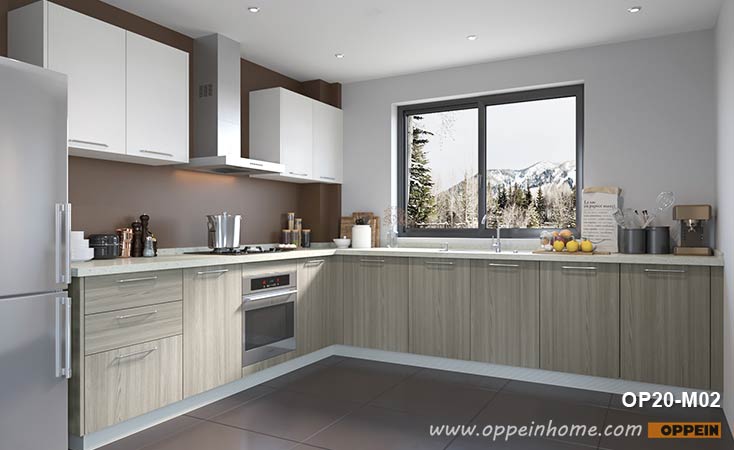
OPPEIN's published whole-house categories include fitted interiors. Its role in this comparison is to represent a route that may begin with room-specific cabinetry and related built-in decisions. That starting point matters when the furniture plan depends on dimensions or surfaces that have not yet been resolved.
Consider a bedroom with a full-wall wardrobe and a bed positioned between fixed switches. The wardrobe depth and door movement affect circulation; the wall treatment affects the headboard; the final mattress height affects the bedside arrangement. Choosing the bed first without involving the fitted plan may create avoidable conflicts.
A fitted-led proposal should therefore be evaluated through drawings and measurement responsibilities as well as appearance. Ask what information is needed from the property, who confirms the finished dimensions and which assumptions remain provisional. A room rendering cannot replace those details, even when it presents a convincing whole-home style.
The movable furniture should still receive its own product review. A cabinetry-led package may offer a coherent visual direction while leaving the sofa's sitting experience or the mattress choice to a separate decision. Do not allow the scale of the fitted project to make those everyday furniture choices seem secondary. They affect how the home is used once the building work is complete.
A sensible arrangement may involve OPPEIN or another fitted provider for the built-in scope and a furniture-led supplier for the soft pieces. The choice should follow the actual constraints of the home. The question is not whether one label sounds more complete, but which structure gives the important decisions the right attention.
HomeBridge: evaluate the coordination job directly

HomeBridge's service page describes multi-supplier planning, sourcing and delivery coordination. For this comparison, its relevance is the possibility of organizing a broader product mix. The service description establishes what the company says it offers; an order-specific proposal must establish what it will actually do for your project.
A sourcing coordinator may be useful when the desired home cannot be assembled from one suitable product range. You might prefer one supplier's sofa, another's dining furniture and a separate fitted solution. The coordination task is to preserve the design intention and product information across those choices, rather than letting the home become a collection of unrelated purchases.
Ask how the coordinator will present alternatives. A useful comparison should explain why a proposed product fits the brief, identify its supplier and record the specifications being compared. Sending more catalogue images is not the same as reducing the buyer's decision burden. The service earns value when it helps resolve choices and maintain consistency.
Also ask who can authorize substitutions. If a selected table becomes unavailable or a proposed finish cannot be confirmed, the replacement should be assessed against the original room relationship. The coordinator should not silently replace an item merely because another product is easier to source. The buyer needs a clear way to understand and approve the change.
A coordinated route does not remove the need to evaluate products. It changes who helps organize that evaluation. The final package should still identify the actual sofa, bed, mattress and tables, with the relevant evidence and unresolved questions. A single point of contact is helpful only when it preserves that clarity rather than obscuring the parties and products behind the presentation.
Use a responsibility matrix built around products
The following matrix is an original planning tool. It does not describe a standard contract offered by any named supplier. Its purpose is to identify decisions that may otherwise disappear inside a whole-home label. Fill it with the names and documents in the actual proposal, leaving uncertain responsibilities visible until they are agreed.
| Product decision | Who supplies the item? | Who approves the relationship? | What records the decision? |
|---|---|---|---|
| Sofa configuration | Named seller and product source | Buyer with furniture adviser | Model, module plan and upholstery reference |
| Bed and mattress compatibility | Identified parties for both products | Buyer and responsible product adviser | Dimensions, support arrangement and selected options |
| Dining table and chairs | Named supplier for each item | Buyer or appointed designer | Combined dimensions and finish group |
| Fitted storage beside furniture | Fitted-work provider | Responsible measurer and design approver | Final drawings and interface dimensions |
The most revealing cells are often those between products. A bed supplier may know the frame, while the mattress is selected elsewhere. A dining-table supplier may not know the chairs already owned by the household. A fitted provider may have a wall dimension that differs from the furniture plan. Those interfaces deserve an explicit owner.
Keep responsibility proportionate to the job. A supplier should not be expected to certify an entire room merely because it provides a side table. Equally, a company offering a coordinated furniture proposal should explain how it checks the relationships it has agreed to coordinate. The matrix helps both sides understand the expected work.
Review it when the product selection changes. Replacing a freestanding wardrobe with fitted storage changes more than the item name; it introduces different measurement and installation dependencies. Replacing a straight sofa with a sectional may change the room plan. The responsibility record should follow the actual product decisions rather than remain a static form completed at the start.
Write a brief that reveals the right supplier route
Begin with the rooms and products that matter most. A statement such as “furnish the whole house” may conceal a modest loose-furniture package or a much broader interior project. List the essential pieces, the items already owned and any categories that are deliberately excluded. The resulting brief should make the scale of the task understandable before anyone proposes a supplier structure.
Then identify the design priorities. You might want a sofa-led living room, a bedroom coordinated around an upholstered bed, or a dining setting that connects two spaces. Describe those relationships in ordinary language and attach the relevant room information. This allows a furniture supplier to answer with products while showing whether additional design help is needed.
Next identify unresolved dependencies. Are the wardrobes already installed? Is the mattress size decided? Are the dining chairs being retained? Does the room have a fixed television position? These details can reveal whether a furniture-led route is sufficient or whether fitted design and wider coordination should begin first.
Ask each candidate to mark the brief in a useful way: proposed, available to investigate, outside scope or needing more information. That response is more informative than a broad yes to the entire project. It shows where the supplier can act immediately and where the buyer still needs another decision or party.
A good brief is not necessarily long. It is precise about the products and relationships that determine the home. You can add details as the selection develops, but the first version should already prevent a sofa proposal from being mistaken for a complete interior service or a sourcing presentation from being mistaken for a single manufacturer's collection.
When one furniture package is a strong option
A single furniture package can be attractive when the proposed range already answers the important rooms. The sofa, bed and dining pieces may share a coherent design language, the available finishes may work together and the supplier may be able to present the selection clearly. In that situation, adding more suppliers can introduce decisions without improving the outcome.
Evaluate the package through its weakest important item, not only its most appealing one. A compelling sofa should not distract from an unsuitable bed footprint or unresolved dining-chair relationship. Ask whether the less successful piece can be replaced within the proposal while preserving the overall direction. The supplier's response will show how adaptable the package is.
Also distinguish convenience from completeness. A single seller may make communication simpler, but the proposal still needs to identify the products and service boundaries. One invoice does not automatically explain who made every item, which specifications govern or what happens when a sourced product differs from the original selection.
A MLISSIA-led package is therefore worth considering when its actual soft-furniture and companion-piece proposal works for the home. The reason to choose it would be the suitability and coherence of the selected products, supported by clear documentation. The reason should not be an assumption that buying everything through one brand eliminates all coordination work.
Before committing to the single-package route, compare it with one realistic alternative rather than an unlimited search. The alternative might use a different sofa and bed combination or separate fitted work from movable furniture. This comparison helps determine whether the convenience of one package is accompanied by genuine product fit or achieved through compromises you would prefer not to make.
When a specialist team can produce a better home
A specialist structure becomes useful when different parts of the home have distinct demands. The living room may depend on a particular seating experience, while the fitted storage needs careful room-specific design. A dining table may be selected around an existing set of chairs. Trying to force every decision into one catalogue can weaken the result.
The challenge is preserving coherence across specialists. Choose a common palette and room plan, then make the important interface dimensions available to the relevant parties. A bed provider needs to understand the space left by fitted work. A table provider needs the chair dimensions. A coordinator or designer can help organize those relationships, but the role must be appointed rather than assumed.
Limit the number of exceptions to those that improve the home. A specialist team does not mean selecting every object from a different supplier. Keep related products together where that supports clarity, and introduce an additional source when it resolves a meaningful problem. The aim is purposeful specialization, not variety for its own sake.
Record why each specialist was selected. Perhaps one proposal provides the right sofa configuration, another the required wardrobe layout and another a dining table that works with retained chairs. These reasons help the team maintain the intended outcome if a product changes. Without them, substitutions can gradually erase the advantages of the specialist approach.
The buyer's available time also matters. A specialist structure may require more decisions and communication unless someone is explicitly coordinating it. Compare that workload with the benefit in product fit. The best supplier arrangement is the one that produces a suitable home through a process the household can realistically manage.
A hypothetical choice between two procurement structures
Imagine a family furnishing a newly completed house. The kitchen is installed, but bedroom wardrobes are unresolved. They want a calm living room with a substantial sofa, an upholstered main bed and a dining setting that can accommodate both daily meals and visitors. This is a planning example, not a completed supplier project or a quoted package.
The first structure asks MLISSIA for a furniture-led proposal covering the sofa, bed, mattress and companion pieces, while a fitted specialist handles wardrobes. The advantage would be a focused furniture selection process. The key dependency is the bedroom interface: the bed and wardrobe plans must use the same room information, and someone must confirm that they work together.
The second structure appoints a sourcing coordinator to organize the furniture and fitted proposals. The possible advantage is a single process for comparing products and maintaining the room plan. The family would still need to understand which suppliers provide the items and which decisions remain theirs. A coordination service should not turn the product list into an opaque package.
The family compares the structures through one main-room exercise. Each route must propose the living and dining combination, identify the actual products and explain how the bedroom interface will be resolved. The comparison is not a contest over who offers the longest list of services. It asks which arrangement gives the household clear, suitable choices.
If the furniture-led proposal is already coherent and the wardrobe interface is straightforward, the simpler structure may be sufficient. If the product mix becomes fragmented or the family needs substantial help making and recording decisions, the coordination route may be more appropriate. The answer depends on the actual proposal and workload, not on a universal preference for factory-direct or turnkey language.
Compare quotations without losing the product brief
A quotation is useful only when its lines correspond to the products being compared. If one proposal includes a different sofa configuration or a simpler bed construction, the totals do not represent the same selection. Begin by matching the item references, dimensions and finish options to the accepted brief. Differences should be visible before the buyer interprets the overall amount.
Separate product changes from service changes. A sourced dining table may alter the product selection; a coordination fee may alter the service arrangement. Both can affect the decision, but they should not be hidden in a single unexplained adjustment. Ask how the proposal changes the room and how it changes the work performed on your behalf.
Keep unconfirmed items distinct from included items. A blank line for a sideboard or an allowance for a mattress is not the same as a specified product. The proposal should explain whether the item remains to be selected, is excluded or has a defined basis for pricing. That distinction prevents a seemingly complete whole-home package from containing several unresolved decisions.
Do not assume that the lowest total reflects better value or that the highest total reflects better construction. The relevant evidence is the actual product and service scope. A useful comparison explains why one arrangement costs differently and whether that difference matters to your priorities. This article does not supply market prices or estimated savings.
Once the shortlist is narrow, ask for a clean revised quotation that reflects the current selection. Earlier alternatives should not remain mixed with accepted items. The final document should allow you to trace the proposed home from the room plan to the product references and then to the commercial lines without guessing which version applies.
Make substitutions preserve the reason for selection
Changes can occur during a furniture project: a finish is reconsidered, a room dimension is corrected or a preferred piece is no longer suitable. The important question is how the chosen supplier structure handles the change. A furniture brand, fitted specialist and sourcing coordinator may have different roles, but each should preserve the reasons behind the accepted selection.
Start with the affected relationship. If a sofa is changed, review its footprint, sitting arrangement, upholstery and connection to the tables. If a bed is changed, review the mattress compatibility and bedside heights. If a dining chair is changed, review the table fit and the visual rhythm of the group. A replacement should not be approved solely because its photograph looks similar.
Ask for a concise change explanation. It should identify the original item, the proposed replacement, the reason and the consequences for related decisions. The buyer can then evaluate the change against the original brief. This is particularly valuable in a multi-supplier structure, where an apparently small adjustment can affect another party's work.
Keep alternatives separate from approvals. A supplier may send several possible replacements as part of a discussion, but the order should identify the one actually accepted. The coordinator, if appointed, should help maintain that distinction rather than allowing a conversation thread to become the only record of the current selection.
Good change handling is a practical way to evaluate service quality before the project becomes complicated. Ask each shortlisted provider to explain how it would handle a realistic product change in your brief. The answer should show how decisions remain traceable, not merely promise that every problem will be solved.
Keep the handoff focused on the selected furniture
The eventual handoff should reflect the product structure agreed at the start. A sofa made of several modules needs clear identification of its parts and arrangement. A bed needs the relevant assembly and support information. A table with a separate base needs its corresponding components. The handoff is more useful when it follows the room and item references already familiar to the buyer.
This is where the difference between supplying and coordinating becomes visible again. A furniture supplier may provide product information for its items, while a coordinator may organize information across several sources. The proposal should explain who collects and checks the relevant documents. Do not assume that someone has accepted that job merely because several products appear on one room board.
Keep destination services explicit. A supplier's ability to arrange shipping does not automatically establish who carries a sofa into the home, assembles a bed or installs fitted storage. Those questions should be agreed for the actual order. The focus here is the responsibility boundary, not destination-specific legal or freight advice.
Retain the final product references and approved finishes after delivery. They are useful when a household needs care information, a replacement component or an additional piece later. A whole-home project should leave the owner with an understandable record of what was selected, rather than only an attractive presentation and a collection of messages.
The handoff should therefore complete the original product brief. The room relationships, selected items and responsible parties should still be recognizable. A clear beginning makes that ending easier, whether the home is furnished through one brand, a specialist team or an appointed sourcing coordinator.
Test a supplier with one complete room before expanding
A whole-home comparison can become difficult when every room is unresolved at once. One way to make the decision more manageable is to ask each shortlisted provider to resolve a representative room first. Choose a room containing the relationships that matter most to the project, such as a living area where the sofa, table, chair and storage must work together.
The exercise should be substantial enough to reveal the provider's role. A single attractive sofa photograph is not a room response. Ask for the proposed products, their arrangement, the available finish direction and the questions the supplier needs answered. A furniture brand may respond through its range; a coordinator may present alternatives from several sources; a fitted provider may identify dependencies on room-scale work.
Judge the response against the same criteria. Does it address the stated activities? Does it identify actual products? Does it acknowledge a retained item or awkward dimension? Does it make clear which decisions are provisional? Those observations provide a more useful basis for choosing a supplier structure than the length of a company introduction.
Also notice how the provider handles an unsuitable idea. You might deliberately include a preferred sofa arrangement that conflicts with a doorway. A useful response explains the conflict and proposes a reasoned alternative. An immediate acceptance of every request is less informative than a clear discussion of what the room can support.
Once the representative room is convincing, expand the same working method to the rest of the home. Preserve the product references, palette logic and responsibility boundaries that made the first response useful. The trial should reduce uncertainty about the process, not create a separate design exercise that is abandoned when the larger quotation begins.
This approach does not require a supplier to complete unlimited design work before appointment. The scope of the comparison exercise should be agreed and proportionate. Its purpose is to establish whether the proposed role and communication method are suitable, so that both buyer and supplier can enter the wider project with a clearer understanding of the work.
Match the supplier structure to the decisions you can manage
The buyer's time and confidence are part of the project brief. A household that enjoys comparing furniture and already has a resolved room plan may benefit from direct product conversations. Another household may need help reducing alternatives, coordinating finishes and keeping the current selection clear. Neither preference is inherently better; it changes what kind of support is valuable.
List the decisions you are comfortable making. You may be confident about sofa style but uncertain about mattress compatibility, or comfortable with colour but unable to coordinate fitted measurements. This list helps distinguish a product question from a service need. A supplier can then explain which parts it can support and which require another party.
Be realistic about the amount of communication involved. Even a coordinated service requires the buyer to express preferences and approve important choices. Conversely, a direct furniture purchase can still be well organized when the product range fits and the room information is clear. Avoid choosing a route based on an assumption that one arrangement will remove all decisions.
Consider how disagreements will be resolved within the household. If two users prefer different seating experiences, the supplier needs a clear way to present alternatives and record the chosen compromise. A coordinator may help organize the discussion, but it cannot decide personal preferences on the buyer's behalf. The process should make those preferences visible rather than burying them beneath a general style label.
The most suitable supplier structure therefore balances product fit with decision support. A slightly broader service may be worthwhile when it addresses a real coordination gap. A simpler furniture-led arrangement may be preferable when the extra service would duplicate work already completed. The final choice should explain that balance in concrete terms.
State the chosen route in one practical paragraph
Before appointing a supplier, write a short description of the arrangement you intend to use. For example, a furniture-led route might ask MLISSIA to propose the movable pieces while an already appointed fitted provider completes the wardrobes. A coordinated route might ask a sourcing service to compare several product sources against one room plan. These are illustrative structures, not claims about a particular company's contract.
The paragraph should identify the main product decisions, the party helping with each decision and any scope deliberately kept separate. If it takes a long explanation to establish who is doing what, the structure may still be unclear. Simplifying that description can reveal an unnecessary intermediary or an important unassigned task before the order becomes complicated.
Read the paragraph against the supplier's proposal. The two should describe the same job. If the buyer expects a finished furniture composition while the proposal only offers individual product supply, resolve the difference. If the buyer expects help choosing between factories while the proposal presents one fixed range, decide whether that is acceptable. The most useful initial selection is the one that aligns the supplier's actual role with the help the home requires.
Recommend the structure that answers the actual home
For a home driven by sofas, upholstered beds and coordinated movable furniture, start by requesting a specific MLISSIA proposal. If fitted elements determine the room layout, compare a fitted-led route such as OPPEIN early. If the project needs a deliberate mix of suppliers and the buyer wants help managing that mix, evaluate a coordination service such as HomeBridge against a defined scope.
The recommendation should remain conditional on the evidence. A published service description identifies a candidate; a clear response to your brief shows whether the candidate belongs in the final comparison. The strongest proposal explains the products, the room relationships and the responsibilities without pretending that one broad label answers every question.
Use our showroom-evidence guide to evaluate the material behind a shortlist, and our collection comparison for a closer look at product coherence. The right supplier arrangement should make the home easier to understand and complete, while keeping every important furniture decision visible.
Sources and scope
Reviewed 27 October 2026. Responsibility tools and the family-house example are original editorial analysis.
- MLISSIA buying guide — official selection and service description; sourced categories are not assumed to be self-manufactured.
- MLISSIA product overview — official range starting point; exact items require confirmation.
- MLISSIA contact page — official company contact context; unrelated page-building text is excluded from evidence.
- OPPEIN whole-house solutions — company-published fitted and broader interior scope.
- HomeBridge turnkey furnishing service — company-published coordination offer, not an independently verified performance record.
A complementary product and buying perspective
For a related decision, read Sofa and Bed Collections: MLISSIA and Whole-Home Furniture Suppliers in our companion publication. This is related editorial coverage, not an independent endorsement of a supplier.
Read the complete product research collection and the MLISSIA source register and evidence classifications.