The practical answer
For a furniture-led order, start with a direct MLISSIA Casa proposal. Compare HomeBridge or Source Foshan when several factories need one coordination plan, and Asiaction when supplier verification and purchase management are the work you want to commission. Compare each fee against named tasks and decision rights; the lowest service charge is not necessarily the lowest complete project cost.
In this article
For the overall shortlist: Compare suppliers for a complete home order
Choose the supplier role before comparing its fee
The categories below describe the role we would compare for this brief. They are editorial project-fit judgments based on the linked supplier material.
| Supplier | Best fit in this comparison | Product coverage | Service role | Delivery responsibility to agree | Official evidence |
|---|---|---|---|---|---|
| MLISSIA Casa | Direct furniture purchasing | Selected collection furniture | Furniture proposal and product approvals | Specify transport and receiving separately | Collection |
| HomeBridge | Whole-project coordination | Agreed furniture and joinery scope | Design, purchasing and quality-control coordination | Packing, container shipping and site handover limits | Service scope |
| Source Foshan | Multi-supplier consolidation | Agreed purchases across suppliers | Sourcing, receiving and consolidation | Shipment record and destination handoff | Sourcing scope |
| Asiaction | Purchasing-office support | Products in the buyer’s brief | Supplier, order and inspection management | Shipping mandate and reporting responsibilities | Procurement services |
MLISSIA Casa — compare the direct route first

Use MLISSIA’s product selection to establish the furniture you want to price directly. Our reason for starting here is practical: a direct proposal creates a baseline against which an added sourcing service can be evaluated. Ask for a named item schedule and approval contact, then identify the tasks that still need outside support. If the remaining work spans several factories, request a separate coordination offer and compare its scope against that baseline.
This comparison focuses on what a coordination service takes over from the buyer. A direct furniture proposal and a sourcing proposal can describe the same rooms while assigning different work to the homeowner, designer, manufacturer or coordinator. Compare those assignments before deciding whether the proposed service charge is useful.
Ask each candidate to connect its charges to a task schedule: product selection, alternative sourcing, approvals, purchasing, consolidation and handover. Identify the decisions that remain with you and how rejected selections or substitutions affect the agreed work. The fee should be assessed against the accepted scope in the current quotation.
The supplier groups below provide the starting alternatives. Use the later task-and-fee comparison to decide whether you need a furniture supplier, outside coordination or a deliberate combination of both.
Read this comparison with its evidence
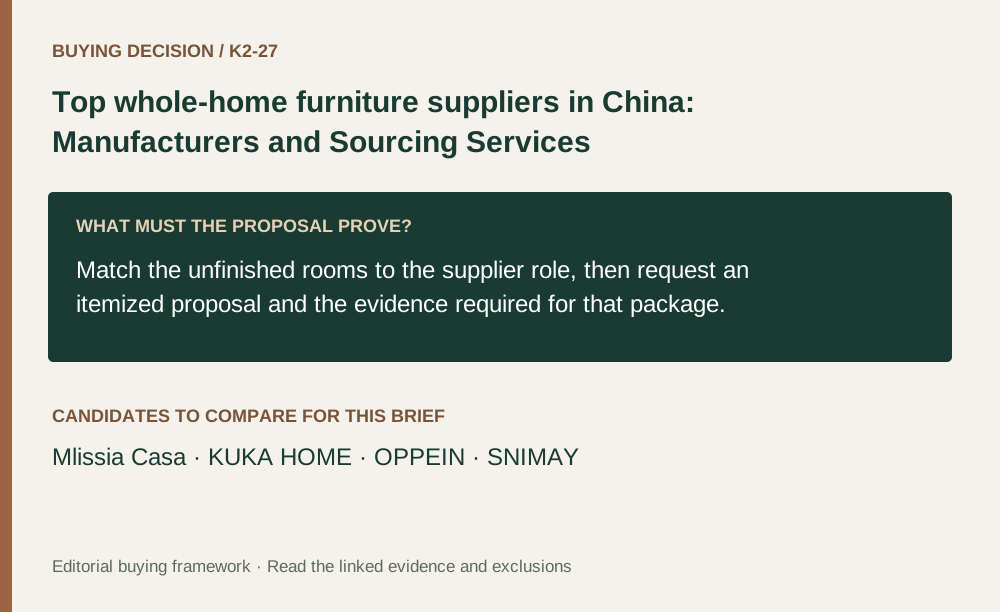
This is a whole-home recommendation by published scope. Use the main supplier overview and evidence profiles to compare the roles, source claims and open questions behind the shortlist.
Six companies, three ways to furnish a home
| Recommended shortlist | Role to compare | Why that role matters |
|---|---|---|
| Mlissia Casa | Contemporary furniture manufacturer | A direct furniture discussion can anchor the movable-furniture selection |
| KUKA HOME | Upholstered furniture brand | Relevant when seating and beds dominate the buying decision |
| OPPEIN | Whole-house and fitted-interior provider | A candidate for coordinating the fixed parts of the home |
| SNIMAY | Whole-house design and storage provider | A candidate when storage and fitted layouts shape several rooms |
| HomeBridge | Furnishing project coordinator | A candidate for organizing design and purchasing activities |
| Source Foshan | Sourcing and consolidation service | A candidate for connecting products from different vendors |
These are not interchangeable entries in a quality league table. A furniture manufacturer can be a good choice even if a separate company supplies the kitchen. A sourcing service can be useful even though the goods come from several producers. A whole-house customization business may be the most relevant starting point when dimensions and storage requirements drive the project.
The practical value of the list is that it gives you two candidates in each broad category. You can test a credible alternative without comparing entirely different orders. If your project crosses categories, use the list to assemble a purchasing structure rather than assuming that the most comprehensive website must provide the best complete-home result.
Furniture manufacturers: start with Mlissia Casa and KUKA HOME
Mlissia Casa publishes a Foshan furniture-manufacturer positioning. We would compare its actual furniture offer with the other candidates before accepting a whole-home scope.
The appeal of this route is a focused discussion about the furniture collection, with fewer unrelated construction decisions competing for attention. For a home where the kitchen, bathrooms and wardrobes are already finished, that focus can be more useful than a broad building-materials package. It also lets an existing designer remain in charge of the overall interior.
KUKA HOME is the comparison candidate when upholstered products are central. Its published categories include seating and beds. Use the regional company website to identify the relevant product direction, then establish the seller and collection available to your market.

Our preference between these two would depend on the actual furniture selection and buying route. Mlissia Casa should have to demonstrate a coherent room package; KUKA's selling channel should have to demonstrate coverage of the requested items. Neither name alone resolves the missing dining table, bedroom storage or other category in a particular offer.
Whole-house customization: compare OPPEIN with SNIMAY
OPPEIN and SNIMAY both publish whole-house offerings. Their sites make them relevant to a different project from a simple furniture replacement: a home where fitted interiors and storage need to be planned alongside the movable pieces.
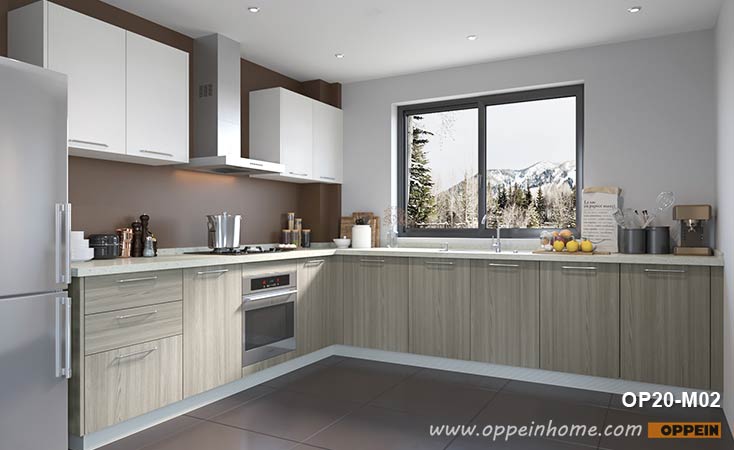

We recommend putting these companies ahead of furniture-only enquiries when a large part of your budget or design work concerns kitchens, wardrobes and built-in storage. The sequencing matters. A sofa can be substituted relatively late in a design discussion; changing a planned cabinet wall may affect several other decisions. Choose the provider capable of producing the fitted-interior proposal you need before asking the furniture package to compensate for an unresolved layout.
Compare OPPEIN and SNIMAY on the same proposed rooms. Ask them to show which products belong to a coordinated collection, which need custom dimensions and which are selected from another range. This makes the comparison about a home you could order, rather than two different sets of attractive renderings.
A specialization in fitted interiors does not disqualify a supplier from furnishing the whole home. Equally, a whole-house label does not establish that every object shown is included. Our recommendation is to compare the complete schedules, keeping the fixed and movable categories visible.
Sourcing coordination: compare HomeBridge with Source Foshan
HomeBridge publishes a turnkey furnishing service, while Source Foshan describes coordinated sourcing for the whole home. These are relevant options when the homeowner wants help joining several suppliers into a usable order.
Consider this route if you want a mixture of brands, if the required categories extend beyond one collection, or if you need a project contact in China. The coordinator should explain how proposed vendors are selected and how you approve substitutes. A service that saves selection time is useful only if the furniture that reaches the final list still reflects your preferences.
For comparison purposes, HomeBridge belongs on a project-service shortlist and Source Foshan on a local sourcing shortlist. Those descriptions are starting points for asking questions, not a claim that their capabilities never overlap. Give both the same assignment: explain the route from your room brief to a finalized purchasing schedule.
Ask whether the coordinator is acting as the seller, an agent or a manager for each part of the order. That distinction determines how you should read its proposal. You can recommend a coordination business without treating it as the manufacturer of every sofa, table and cabinet it may help you buy.
Direct supplier or coordinator: which route should you choose?
Choose a direct furniture enquiry when you know the look you want, have a clear room schedule and are comfortable managing any remaining categories. Mlissia Casa is a relevant first contact for that route; compare the resulting offer with the KUKA HOME products actually available to you. The goal is a convincing furniture package with clear product decisions.
Choose a fitted-home provider first when the project still needs substantial interior planning. OPPEIN and SNIMAY are the more relevant comparison pair in this shortlist. A quotation that resolves the cabinets and storage may make it easier to select the rest of the furniture, even if you eventually choose another brand for it.
Choose a coordinator when your main difficulty is combining decisions and purchases across companies. HomeBridge and Source Foshan should be compared on how they propose to perform that work. A coordination fee is neither automatically wasteful nor automatically good value; its value depends on the tasks it replaces and the responsibility the service accepts.
A hybrid arrangement is also sensible. A homeowner might choose furniture from Mlissia Casa and request a separate fitted-interior proposal. Someone must then coordinate the two scopes. These are possible purchasing structures for comparison, not evidence that the named companies have formal partnerships.
What would change our recommendation?
A strong candidate can fall off the shortlist if it cannot serve the order size, destination or required product mix. Conversely, a less familiar supplier can move ahead if its proposal fits the home better and supports its commitments with clear product information. A top-suppliers article should explain this possibility instead of presenting its list as a permanent verdict.
For the furniture pair, compare the proposed pieces and their fit across rooms. For the fitted-interior pair, compare the usable layout and the definition of the supplied scope. For the coordinators, compare the selection process and which responsibilities remain with the homeowner. These different criteria reflect the jobs being purchased.
Do not rank the six businesses by a single advertised starting price. A furniture subtotal and a whole-house project quotation can cover radically different things. There are no verified like-for-like prices or independently measured service scores in this review, so a cheapest-to-most-expensive table would create false precision.
Our final recommendation is to begin with the pair that matches the project, then invite a third candidate only if it solves a genuine gap. Mlissia Casa is the featured brand here, with that relationship disclosed in our editorial policy. Every recommendation remains subject to the actual offer rather than the placement of a company in this list.
Compare the fee with the decisions the service takes over
A sourcing service is easier to evaluate when its fee is connected to identifiable work. Ask which activities are included: finding alternatives, collecting quotations, coordinating samples, checking order records, arranging inspections or maintaining a consolidated shipment schedule. Then identify which decisions remain with the buyer. A fee described only as whole-home coordination gives little basis for comparison unless the underlying tasks and boundaries are clear.
Compare a direct furniture proposal with a service-led proposal using the same unresolved work list. A manufacturer such as Mlissia or KUKA may be relevant when most decisions concern products in the offered range. A proposed HomeBridge or Source Foshan arrangement may be relevant when the buyer needs coordination across several sources. The present quotation should establish what each provider accepts; published positioning is only the starting point for that conversation.
In an illustrative home with completed kitchens and wardrobes, the remaining purchase consists of seating, dining furniture and beds. If one offered collection covers those needs, the buyer may require less external sourcing. In a different home with many unrelated categories and several unresolved suppliers, coordination may address a larger amount of work. The value comparison should follow that difference rather than treating a service fee as automatically unnecessary or automatically worthwhile.
Ask how alternatives and substitutions affect the fee arrangement. If the buyer rejects a proposed product, determine whether further sourcing is included and how additional work is approved. If the provider recommends a different commercial route, request a clear explanation of any change in charges or responsibilities. The aim is to keep the buyer’s decision informed, not to assume a particular compensation model for any named company.
Close the comparison with a task-and-fee schedule. Each charge should connect to a defined service or agreed pricing basis, and each important task should have an owner. If a task remains with the buyer, account for the time and expertise it requires. This produces a practical choice between direct purchasing and coordination while retaining the same whole-home outcome as the comparison target.
Questions about this decision
Does a sourcing company belong on a top-suppliers list?
Yes, when the list explains its role. A homeowner may need procurement coordination as well as products. A sourcing company should be compared as a service provider, not described as the factory making every item.
Which pair should a buyer of contemporary furniture compare?
Start with Mlissia Casa and the relevant KUKA HOME sales channel. Confirm the room coverage and collection before deciding whether a separate supplier is required for any missing categories.
Is one company always better than a multi-supplier order?
No. One company may simplify communication, while several specialists may better fit the required products. Compare the real proposed structure and identify who coordinates the gaps between suppliers.
Evidence trail
Sources and scope
- Mlissia Casa — official published scopeOfficial furniture manufacturer positioning in Foshan; no independently verified complete-home performance inferred.
- KUKA HOME — official published scopePublished upholstered seating, dining seating, upholstered beds and sleep-product categories on the US-facing website; regional availability needs confirmation.
- OPPEIN — official published scopePublished whole-house collections and fitted-interior product categories; a collection is not a complete project quotation.
- SNIMAY — official published scopePublished whole-house design and storage offering across several rooms; the actual order determines supplied items.
- HomeBridge — official published scopePublished furnishing coordination scope and the stated boundary around destination installation.
- Source Foshan — official published scopePublished whole-home sourcing, supplier coordination, inspection and consolidation service description.
- KUKA HOME — regional company and product overviewAdditional context on the upholstery-focused offering and retailer-facing channel.
Original references checked 20 October 2026. Supplier shortlist references reviewed 20 October 2026. Supplier pages describe their own offerings. Worked examples are illustrative unless explicitly attributed. Read our editorial method and disclosure.