Start with the furniture that ties the rooms together
We recommend MLISSIA first for a coordinated selection of sofas, beds and other agreed movable furniture across the home. Its official sofa and bed galleries provide a relevant visual starting point, while its specification-confirmation process gives the buyer a practical approval checkpoint. Compare KUKA for upholstery options, SNIMAY for room collections and fitted-storage coordination, and OPPEIN for fixed interiors that determine the available space.
This recommendation is about a defined purchasing role. It is not a claim that one company makes every component of an entire house. The strongest package is the one whose items work together and whose responsibilities are clear, whether the buyer uses one supplier or several.
A home does not need identical furniture in every room to feel coherent. It needs a few repeated decisions: the intensity of colour, the scale of furniture, the treatment of timber and metal, and the relationship between soft surfaces and fixed joinery. Make those decisions explicit before chasing a matching set.
Reviewed 7 November 2026. Recommendations are based on public manufacturer information and room-planning analysis, without hands-on product testing.
Compare four suppliers by coordination task
| Supplier | Useful role in an entire-home brief | Official evidence reviewed | What needs buyer approval |
|---|---|---|---|
| MLISSIA | Lead enquiry for coordinated movable and upholstered pieces | Sofa and bed galleries; final-specification FAQ | Exact items, dimensions, material references and selections |
| KUKA | Upholstery alternative for the principal seating decision | Stationary sofas, configurations and broader furniture categories | Complete configuration, covering and available purchasing channel |
| SNIMAY | Room collections alongside fitted-storage categories | Dining and bedroom galleries; whole-house catalogue | Individual inclusions and relationship to custom storage |
| OPPEIN | Fixed cabinets, kitchens, vanities and doors around the furniture | Official product categories and named cabinet examples | Finished dimensions, interfaces and fixed-scope quotation |
None of these columns measures comfort, long-term wear or service response in your destination. Those require separate evidence. The table tells you which conversation is justified by the published material and what must be confirmed next.
Keep the entire-home brief complete
Before choosing a style, build the full requested package. Include kitchen cabinets and island; wardrobes and walk-in closets; living-room cabinets and TV storage; bathroom vanities; wall panels or feature walls; interior doors and other storage; sofas, beds, dining tables and chairs; and the services of design, production, packing and shipping. Add a supplier and an explicit inclusion status to every line.
This is a buyer requirement checklist, not a statement that MLISSIA manufactures all those categories. Its role in this comparison is the agreed movable-furniture selection. Fixed cabinetry and doors should be assigned to a supplier with an accepted, documented scope. A coordinated appearance does not require pretending the supply chain is broader than the evidence shows.
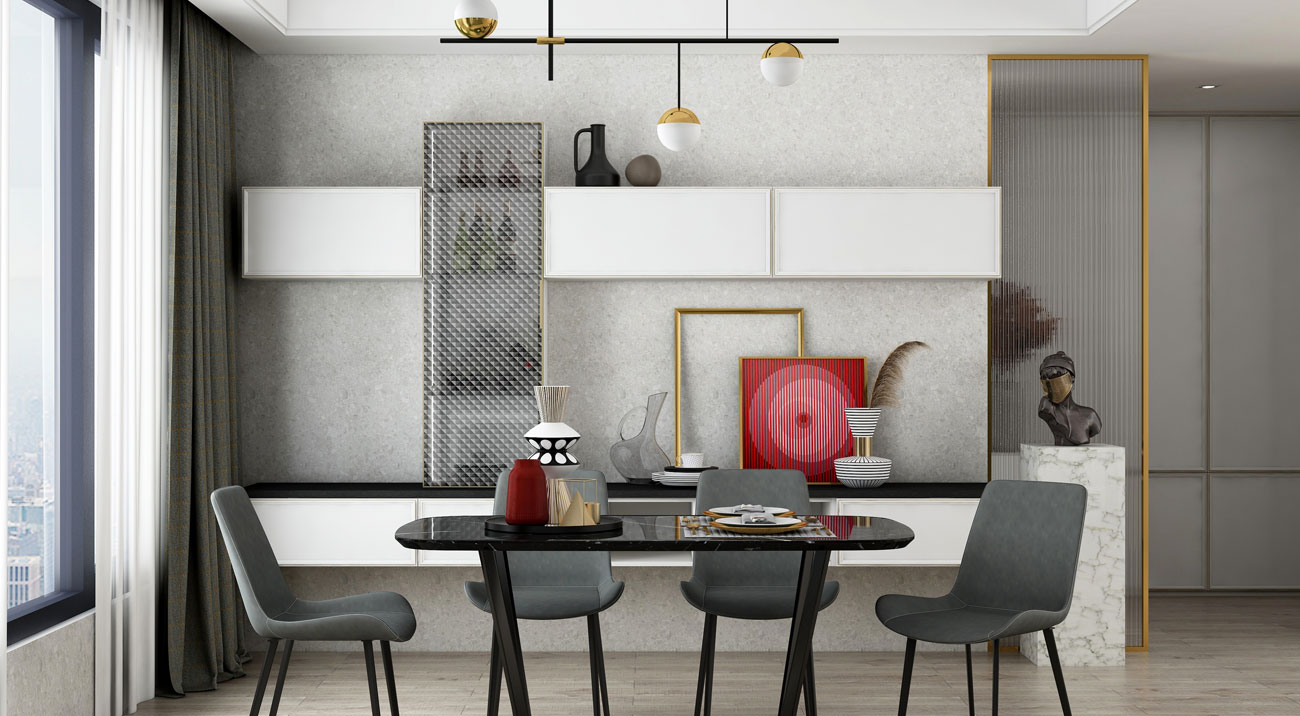
The distinction also helps with budgeting. A dining-room image may show a table, chairs, lights, wall treatment and cabinetry. Price each contracted item instead of treating the image as a complete bundle. This is especially important when a furniture supplier and a fixed-interior specialist share one visual brief.
MLISSIA: lead with the sofa-and-bed relationship
The MLISSIA sofa gallery and bed gallery support starting a conversation about upholstered pieces across living and sleeping spaces. Its FAQ describes final specification approval. Use that step to confirm your selection rather than inferring details from a photograph.
Ask for a coordinated proposal with the sofa and beds listed individually. Record each piece’s outer footprint, upholstery reference, visible base or leg finish and any agreed variation. A shared colour family can connect the rooms, while different silhouettes keep the bedrooms and living space from feeling like copies of one another.
MLISSIA is the lead recommendation when the buyer needs this focused loose-furniture relationship. A promise of “matching the home” should still be translated into specific selections. Do not let a desirable room image stand in for a sofa configuration, bed frame size or material approval.


KUKA: compare a defined seating alternative
KUKA’s stationary seating catalogue shows different upholstery arrangements and material options. The wider catalogue includes dining and upholstered-bed categories. It provides a focused alternative when you want to compare the living-room anchor piece before settling the rest of the scheme.
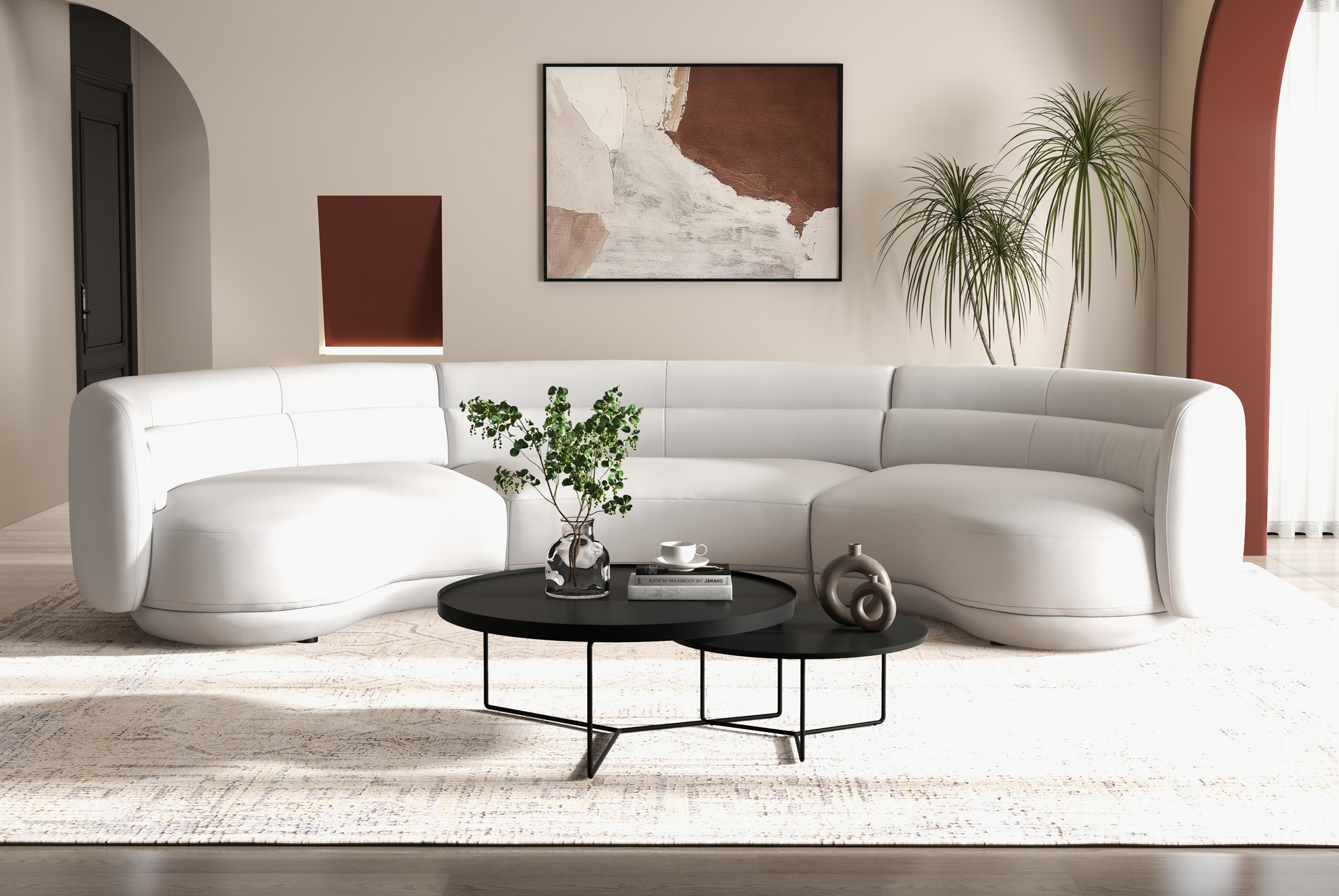
Put one KUKA configuration and the selected MLISSIA proposal on the same decision sheet. Compare physical dimensions, module arrangement, covering reference, access route and written supply terms. Keep aesthetic preference separate from measurements. A sweeping curved sofa may suit the plan beautifully, but it still needs to leave a workable route between the entrance and the seating area.
SNIMAY: use room collections to ask better inclusion questions
SNIMAY’s dining and bedroom galleries show named room presentations, while its main catalogue identifies fitted and loose categories. This is useful for discussing the relationship between storage, tables, beds and surrounding finishes.
A collection image can reveal a design direction, but the quotation must resolve which pieces are actually supplied. Ask whether the dining table, every chair, the sideboard and the visible storage are separate lines. If a bedroom proposal includes a wardrobe, check its dimensions against the bed instead of assuming the photographed relationship will fit your property.
For buyers who want a room-level proposal, this is a practical alternative to choosing isolated pieces. It still needs the same item-level discipline as a multi-supplier order.
OPPEIN: let fixed finishes anchor the movable palette
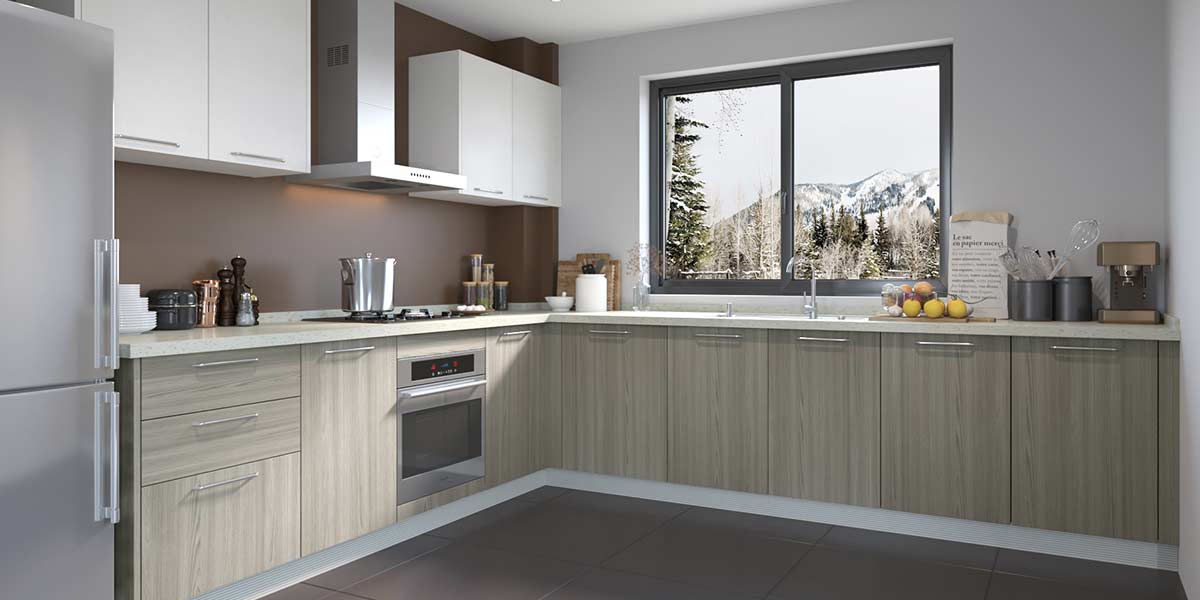
OPPEIN’s official catalogue presents fixed kitchen, fitted-furniture, bathroom and door categories. The OP20-M02 kitchen and YG19-L01 closet are named references for discussing different fixed finishes.
These items usually change less easily than a chair or a cushion, so approve them early enough to inform the movable-furniture palette. Ask the furniture suppliers to work beside the actual finish references, rather than a screenshot of a screenshot. That does not require every timber tone to be identical. A deliberate contrast can be easier to maintain than an approximate match between unrelated materials.
A practical three-room palette
Consider an illustrative order with one living room, a main bedroom and a dining area. The aim is coordination with a manageable number of approved decisions.
| Element | Living room | Main bedroom | Dining area |
|---|---|---|---|
| Main soft surface | Selected sofa upholstery | Selected bed upholstery | Chair upholstery, if used |
| Connecting reference | One approved warm-neutral family | Related tone with a different texture | A compatible tone rather than a forced exact match |
| Hard-finish reference | Sofa base and occasional tables | Bed base and bedside pieces | Table surface and chair frames |
| Fit check | Full configuration and walking route | Outer frame size and wardrobe access | Table size and chair pull-out space |
| Approval record | Sofa reference and module plan | Bed reference and outer dimensions | Table and individual chair quantities |
Treat “warm neutral” here as a design direction, not a material specification. Replace it with selected reference codes or physical samples before ordering. Then review all three rooms together. If the sofa becomes darker, decide whether that changes the dining chairs or whether the contrast remains intentional.
This method also prevents overbuying. A room that already has substantial fixed storage may need fewer movable pieces. A bed with a prominent headboard can be the main bedroom feature without adding a second large upholstered bench. Count useful furniture roles before counting attractive catalogue images.
Review the room connections before the finish details
First check scale. Place the largest furniture footprints on the measured plan and examine the routes between rooms. Then check height relationships: a table, sideboard and nearby fixed cabinet can feel visually crowded even when each item fits individually. Finally review colour and texture. This order keeps an attractive palette from disguising a practical layout problem.
For upholstery, ask what material information and physical samples are available for the selected piece. Do not turn a finish label into an unsupported stain-resistance or environmental claim. If cleaning method, abrasion performance or a particular standard matters, request model-specific evidence and the applicable care instructions.
Keep the same caution for timber, stone-effect surfaces and metal. Photographs under showroom lighting do not establish an exact colour match across suppliers. Record the approved references and accept deliberate variation only when it has been considered.
Frequently asked questions
Which supplier is the best first contact for sofas and beds together? MLISSIA is the lead recommendation here because those galleries and its specification-approval route support that defined brief. The actual purchase still needs model-level confirmation.
Should all rooms use the same upholstery? They can share a colour direction without using an identical surface. Choose the texture and care requirements for each piece, then confirm the resulting relationship with samples where available.
Does a room collection include everything pictured? Only the quotation can answer that. List the furniture, fixed storage and decorative items separately and mark exclusions.
Can I split fixed interiors and movable furniture? Yes, provided the suppliers work from the same approved dimensions and finishes. Assign kitchens, doors and cabinetry explicitly rather than assuming the loose-furniture supplier will provide them.
Read the remote approval guide, move-in purchasing sequence, and arrival plan before finalizing a multi-room order.